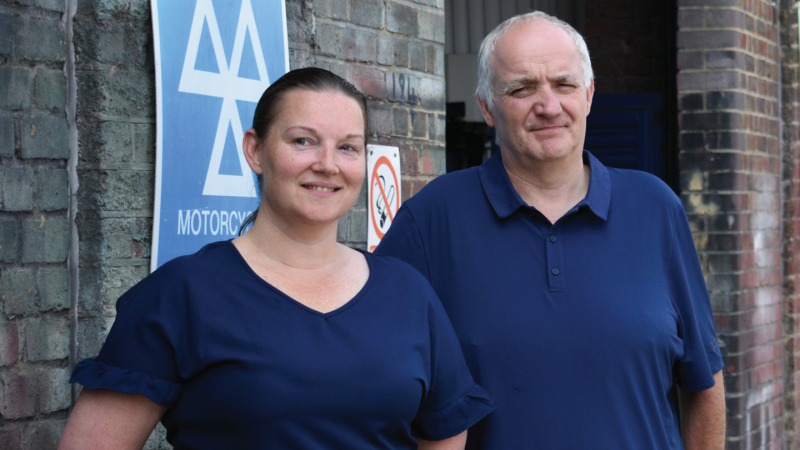
PMM editor Kieran Nee recently visited the UK’s busiest MOT test centre, The Test Centre, to find out why the MOT test fee cap urgently needs to be raised.
When the PMM team comes to putting together an article or a new idea for a podcast, it usually involves coming up with a topic that is relevant and topical to the aftermarket and then approaching a garage or an organisation and asking them to discuss that topic. It’s usually easier said than done. Some topics, however, are brought to you on a silver plate. And one such topic, that is perennially relevant, is the MOT.
So when Ian Wills, managing director of The Test Centre, sent over an email an open letter, no less, calling on the IMI and on the Government to raise the MOT test fee cap we knew we had to follow up. So, the following week, I jumped on my bike and cycled down to Deptford to meet Ian and manager Michelle Glasscock.
As a quick recap, not that many of you reading this will need it, the price a certified MOT test centre can legally charge a customer is capped by the Government at £54.85 for a Class 4 vehicle. A standard passenger car, for instance. This cap was set way back when Gordon Brown was still the Prime Minister, meaning that it hasn’t changed in 16 years.
You may have noticed in those 16 years that the price of everything else has changed in that time, including the value of the pound. You can buy less with £1 now than you could in 2010. In fact, what would cost you £1 in 2010 would today cost you £1.60. This means that if you bought, for example, a big bag of socks worth £54.86 in 2010, in 2026 that same bag would cost you £87.56. But not an MOT. An MOT costs the same name as it did 16 years ago – despite having previously risen in line with inflation up to that point.
More for less
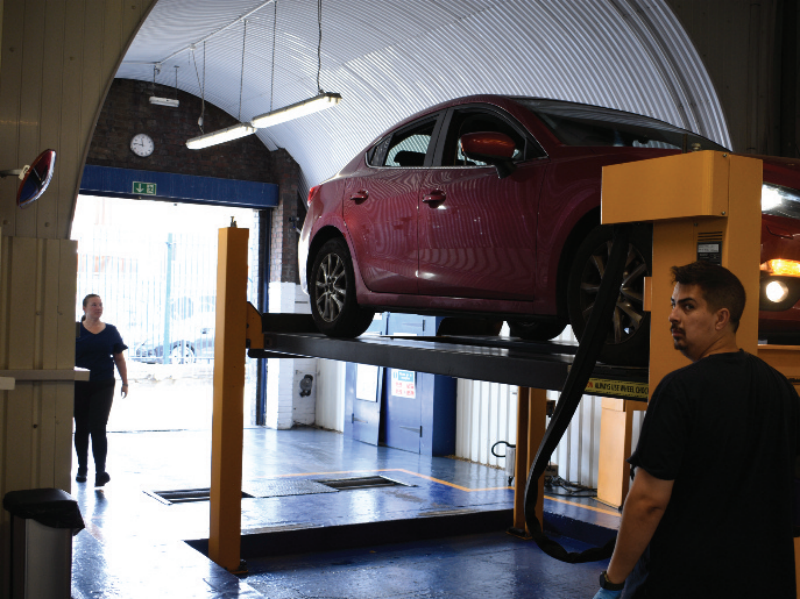
As Ian points out to me, that £87.56 is still on the low side. Arguably, MOT test centres are being asked to do more than before and have particular harsh rises in operating costs, including heating and wage rises. Wages have raised spectacularly since the pandemic due to massive shortages in trained technicians in the UK. “Remember,” he tells me, “the MOT is a safety inspection of your vehicle. It’s an important job. Time should be taken over it and it should not be rushed. But to make money, we need to get as many as we can through the door.”
For many cars, the MOT is the only time throughout the year that they actually see the inside of a garage. Michelle tells me that customer behaviour has changed in recent years: “It used to be that people got an annual service. Now they have the car five years without even changing the oil. They’re relying on the MOT to get by and keep their car on the road. And now with EVs, because they need less servicing, people are treating the MOT as a box that simply needs to be ticked.”
But with inflation having risen so drastically in the last 16 years, and not everyone’s wages having followed suit (and accommodation costs rising disproportionately to salary), it’s a hard sell for governments. Michelle agrees, telling me, “it’s going to hurt, absolutely. Had it risen each year like it used to, it would be palatable for everyone. And now a sudden increase feels unfair. It should have kept rising each year.”
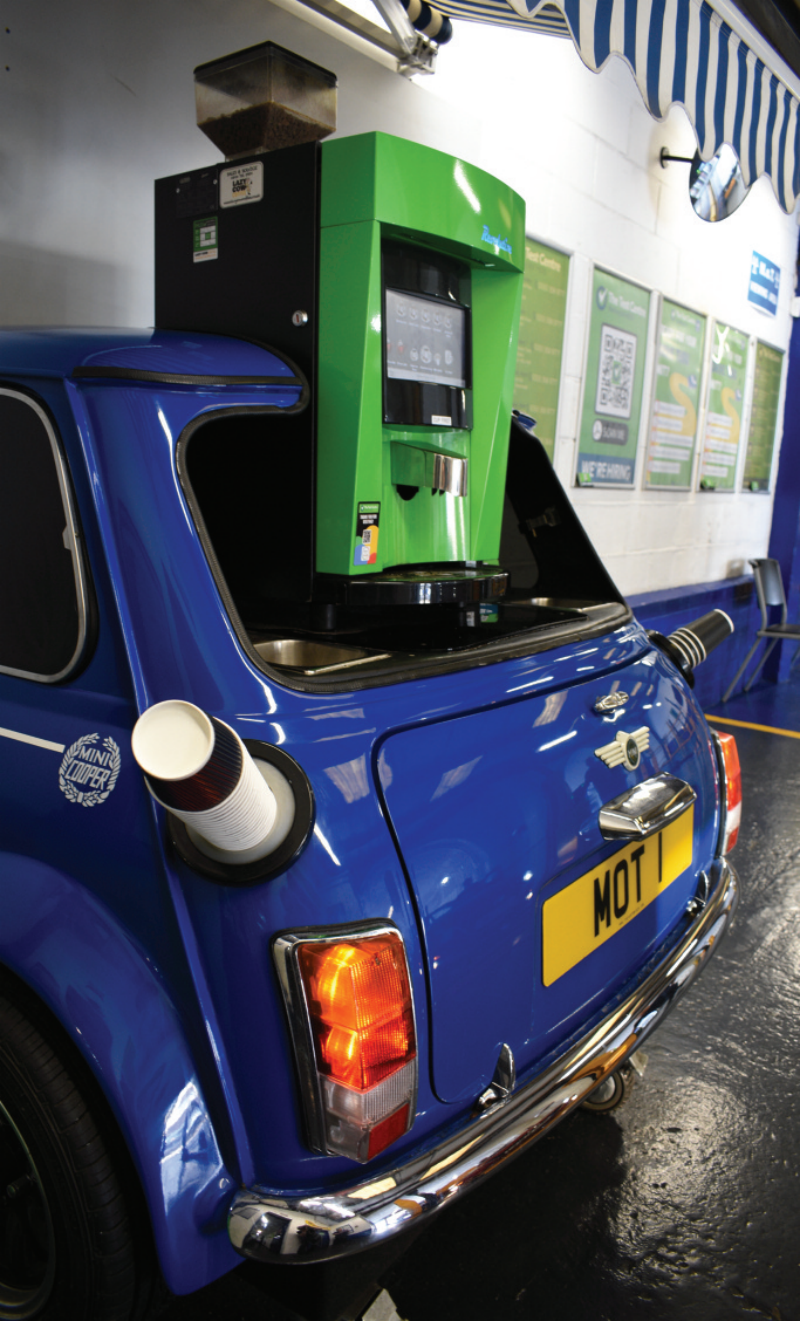
One of the nicest coffees in the aftermarket!
Bigger picture
The problem is that whilst the Government is only thinking about whether voters would appreciate a £30 increase in their annual MOT, the MOT cap is actually linked to much bigger and more serious problems within the MOT system. Ian told me that in previous conversations with the DVSA, he has been told that the MOT should act as a loss leader for garages. AKA, get customers in with the promise of a cheap MOT, make the money back on the repairs needed. Yes, the DVSA is serious. No, we can’t believe it either.
This opens a big problem around biased MOT testing. In a perfect world, every MOT would carried out to the exact standard specified by the DVSA. Putting to one side any discrepancies in interpretation of that standard as written, the simple fact is that in the real world MOTs as carried out by different testers bring different results. Brake pads are the classic case with drivers often being given different valuations of their pads by different testers. The Test Centre only does the MOT — you have to go elsewhere for the repairs. This, Ian says, naturally removes the bias towards failure that affects other testers. It’s the same system they have elsewhere, in Germany for example. Looking to Germany, the fail rate is a lot lower, Ian says, than it is here, specifically for that reason. There are pros and cons to the system — you just have to look at Northern Ireland, for example, to see how it can wrong. But raising the MOT price cap would at least mean that test stations aren’t forced to make their money back through repairs.
Perhaps more serious, though one would hope not quite as widespread, is the issue of fraudulent MOTs. These are MOTs sold online, where the car is never brought into the test station at all. The DVSA has announced that photo evidence will be rolled out across the MOT network and this should go a long way to eliminating this form of fraud. But perhaps if testers made more money from genuine MOTs and drivers’ cars were less likely to fail a genuine MOT, there would be less of a market for the fraudulent kind.
The solution
I asked Ian whether test centres should be forced to charge a minimum or even be forced to charge the full amount of the MOT, or whether there should even be a price cap at all. “I remember a long time ago,” Ian tells me, “in Manchester, a group of MOT test stations all agreed to charge full price. Well, the DVSA penalised them under monopoly rules. This is a safety check, competition should have nothing to do with it. If a garage offers an MOT at 1p, what does that say about the inspection itself? Nothing good.” Michelle steps in to object to the idea of no cap at all — “for me, I think it would be taken advantage of by some garages, and that would be wrong too. It should be a set fee and set test”.