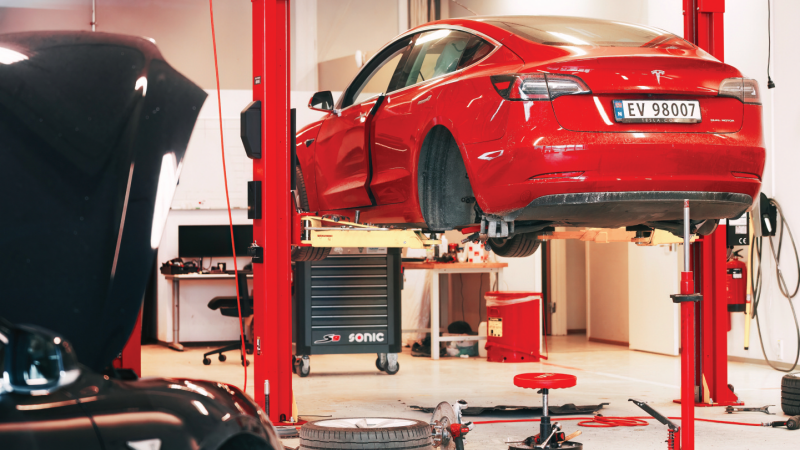
With suspension failures already a leading cause of MOT failures, the added weight of electric vehicles will only see the numbers increase something, Comline argues, independent workshops can capitalise on.
The rise in vehicle weight, primarily due to the substantial battery packs in EVs, is a significant contributing factor behind EVs entering workshops. These battery packs exert a constant load on steering and suspension components, especially during cornering, braking, or driving on uneven road surfaces. Consequently, there’s increased stress on joints, leading to accelerated wear and tear if the components aren’t adequately designed to withstand the load.
The RAC believes the UK has more than one million potholes around six per mile on council-controlled roads in England and Wales with the government holding a pot of £1.6 billion to tackle the issue for the rest of 20261.
Regenerative braking
The way an EV is driven can also affect steering components; for instance, electric motors deliver instant torque, which can generate sudden and repeated forces during acceleration.
In another example, regenerative braking, which is used more frequently in an EV than a conventional braking system, creates repeated deceleration forces. These are transferred through the chassis and steering system. Over time, these load patterns can hasten wear on tie rod ends, ball joints and related components, highlighting the importance of strong materials, accurate tolerances and robust manufacturing and testing.
Reduce early comebacks
Reliable, easy-to-fit parts are important to workshops, Comline says. By technicians fitting dependable steering and suspension components, motorists can expect their vehicle to maintain correct steering geometry and enjoy smooth handling behind the wheel.
EV steering and suspension range
Comline hasn’t had its head in the sand when it comes to EVs. In fact, it has been developing a range across all of its product groups to support the emerging sector and currently has more than 3,700 part numbers for these vehicles. What’s more, a dedicated development team is adding new references every month.
Specific to steering and suspension, there are 1,300 hybrid and EV-related references in Comline’s portfolio. These include tie rod ends, ball joints, control arms and bushings, stabiliser mountings and links, and axial joints. Parts are manufactured using quality raw materials and subjected to a 900-hour salt spray test and 3 & 4 axis testing, to ensure that each part performs to the highest standard under pressure. As a show of confidence, Comline steering and suspension parts are supported by a three-year warranty.