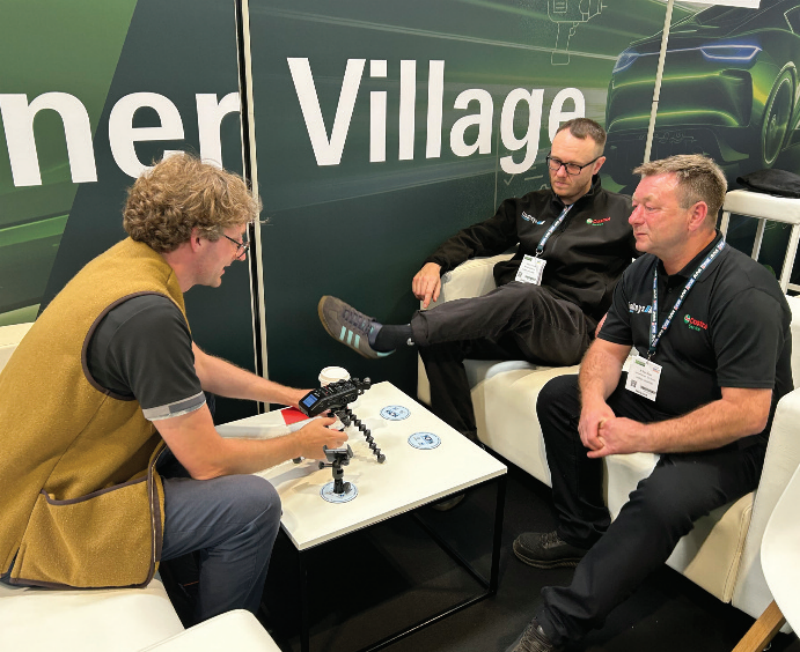
Following on from the last issue’s news of the Motor Ombudsman’s campaign against part-worn tyres, PMM decided to find out more by speaking to the campaign’s workshop partners at the UK Garage and Bodyshop Event.
Hi guys, could you introduce yourselves for our readers?
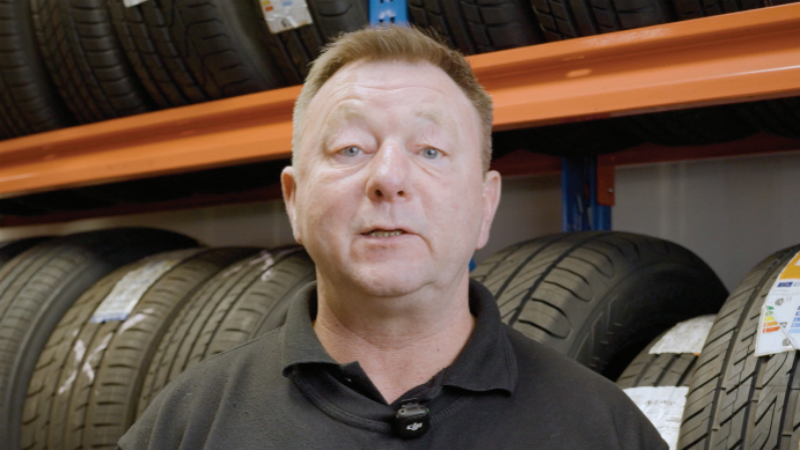
Ryan: Hi I’m Ryan O’Donnell, marketing director at Lindley’s Auto Centres. Paul: And I’m Paul Brown, general manager tyre division at Lindley’s.
What relationship have you had with the Ombudsman in the past?
Ryan: We’ve had a great deal of vehicles come through our workshop over the years and naturally have dealt extensively with the Ombudsman. We’ve always had a great relationship and found them to be very fair. They approached us last year regarding a different campaign which had great success, so when they brought up tyres this year, we thought, let’s get involved. We do around 2.5k tyres a month across our sites, so I guess we have something valuable to add!
How important are tyres to Lindley’s overall operations?
Paul: It’s been a big part of the strategy since 2012, but really it’s come into focus since 2018. Typically, the tyre market has been driven by price, and that still holds true today. You do get a section of customers, however, who want the premium end and even the OE standard tyre, to keep it as it was when it left the factory.
When it comes to choosing what tyre, good garages should be discussing the options openly with the customer. The best option is always to stick with the ones that the vehicle manufacturer chose. But at the end of the day, it’s the customer who has that choice.
So tell me about the campaign that you’re promoting today.
Paul: So the campaign is called “WORN-WARN”, and it’s about the hidden dangers of part-worn tyres. Most drivers would look at a tyre and think, it’s got 3-4mm thread, that’ll do. But what they don’t realise is that that’s not the only potential danger. Age is also an important factor. Tyres have their date of birth, or a DOT code on the sidewall. This is when it was manufactured and most drivers don’t know it’s there.
Repairs are also an issue. There is a British Standard puncture repair which is allowed on tyres, but again, most drivers don’t know what the standard is. Generally, drivers need to look out for cracks, bulges and uneven wear. We want customers to be fully informed before making the decision. If they choose part worn, well it’s not something we would fit at Lindleys, but as long as they’re making an informed decision, that’s what this campaign is about.
Where are the part-worn tyres coming from?
Paul: Generally from the UK, and about 5.5m of them are sold here each year. About 25 per cent come from abroad, however. And they can come from all kinds of routes, including accident damage, reaching the end of its life, vehicle dismantlers and reclaimers. History matters when it comes to tyres and with part-worns, you don’t know the history.
Isn’t one piece of rubber as good as another?
Paul: I would say tyres are the most safety critical component on a vehicle and aren’t being given the consideration they deserve. That small footprint of rubber is the only point of contact between your vehicle and the road.
Would you like to see part-worn tyres banned?
Paul: I would like to see legislation ramped up, standards improved and more information given to the customer. There is legislation already in place, in fact, but no recourse against those who flaunt it. They are the sustainable option, it’s true, but I believe safety trumps sustainability. If a garage fits a part-worn tyre without fully inspecting and marking them, they’re breaking the law at the end of the day.