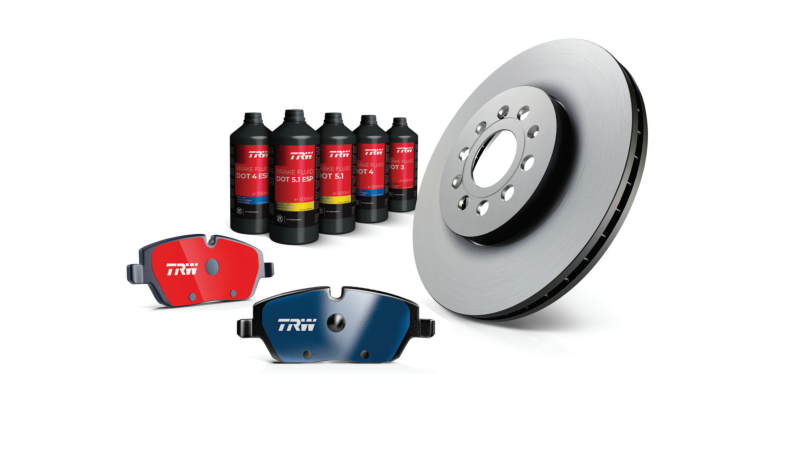
Why is it more important now to fit OE-quality brake pads on your customers’ cars than ever before? Well, ZF explains.
As braking systems become more integrated with vehicle electronics, driver assistance technology and electrified powertrains, independent workshops are increasingly being asked for advice that goes beyond simple replacement. Customers want to know whether different pads will stop them faster, whether upgraded components are safer and whether additional services are worth the investment.
According to Stuart McLeod, ZF Aftermarket technical support & training lead, the challenge for technicians is balancing customer expectations with the reality that modern braking systems are engineered as complete, finely tuned packages.
ECE R90 confusion
One area that frequently causes confusion is ECE R90 approval. While pads and discs sold for road use in Europe must meet this regulation, McLeod explains that compliance alone does not guarantee identical performance.
“ECE R90 sets an upper and lower friction limit. As long as a pad sits within that range, it can be approved,” he says. “But a pad operating at the lower end of that scale will perform very differently to one at the upper end.”
This variation comes down to friction material composition. Different compounds generate different friction levels, behave differently under heat, and transmit energy into the braking system in different ways. Some track-focused pads actually exceed the maximum friction levels permitted by ECE R90 and are therefore not road legal.
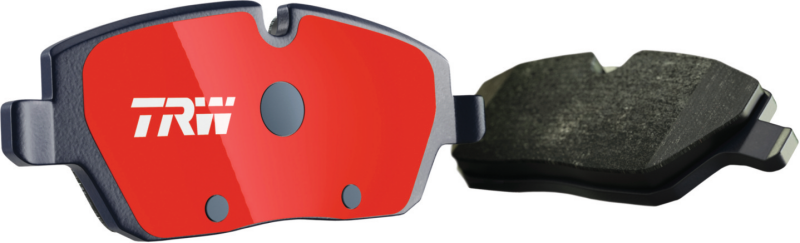
“These products are designed for motorsport or heavy track use,” McLeod explains. “They can generate too much friction for road applications and should not be fitted to vehicles used on public roads.”
In the independent aftermarket, the temptation to fit cheaper or ‘alternative’ braking components has become more problematic as ADAS technology has moved from premium models into the mainstream. McLeod stresses that braking performance is not an isolated function that modern vehicles can simply adapt to.
“The vehicle manufacturer calculates stopping distances and braking forces using the original OE components,” he says. “If you mechanically alter those characteristics by fitting parts that perform differently, ADAS systems such as autonomous emergency braking cannot compensate.”
This means that fitting pads or discs that do not match OE performance can prevent safety systems from operating as intended, potentially creating dangerous situations for drivers. For workshops, this presents a clear opportunity to explain why OE-quality components are not just about longevity or refinement, but about preserving vehicle safety systems.
What OE performance really means
From a product perspective, McLeod notes that OE suppliers tend to focus on replacement parts that replicate original performance rather than offering performance upgrades. Within ZF Aftermarket’s TRW braking range, the emphasis is on optimising braking for different vehicle requirements rather than increasing outright stopping power.
“We offer pads with a COTEC coating to improve braking performance during bedding-in, DTEC pads that reduce brake dust while maintaining OE performance, and Electric Blue pads designed to improve noise, vibration and harshness characteristics on hybrid and electric vehicles,” he explains.
These options allow workshops to tailor braking solutions to customer needs, such as cleanliness, comfort or suitability for EV use, without compromising system compatibility.
McLeod is also cautious about the growing trend of fitting racing or track pads to road cars in the belief that they represent an upgrade.
“Race pads are designed to perform at very high temperatures under extreme braking,” he says. “In everyday driving they often don’t reach their optimal operating range, can be very noisy, and may perform worse during normal use.”
Braking fluids
Brake fluid is another area where education can add value. Most commonly used fluids, including DOT 3, DOT 4 and DOT 5.1, are hygroscopic and absorb moisture over time. McLeod explains that after around two years, this moisture content can significantly reduce the fluid’s boiling point and increase the risk of internal corrosion.
There are also thermal implications to consider. Altering friction material can change how heat is transferred into calipers, pistons and brake fluid, potentially increasing stress on components that were never designed for those conditions.
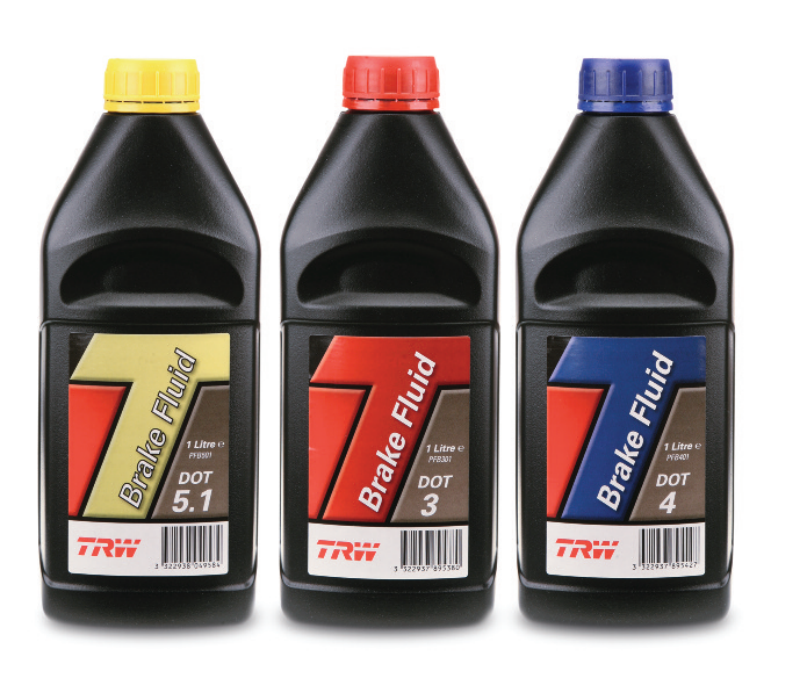
While DOT 5.1 offers a higher boiling point than DOT 4, McLeod advises workshops to follow manufacturer specifications rather than automatically upselling a higher-rated fluid. He also warns against confusion with DOT 5 silicone fluid, which is incompatible with glycol-based systems and only suitable for specific applications such as classic cars stored long-term.
EV braking
Electrified vehicles introduce further complexity. Although EV friction brakes are used less frequently due to regenerative braking, McLeod points out that manufacturers account for this in system design. If issues do occur, a strip and clean service may be appropriate, but unnecessary upselling should be avoided.
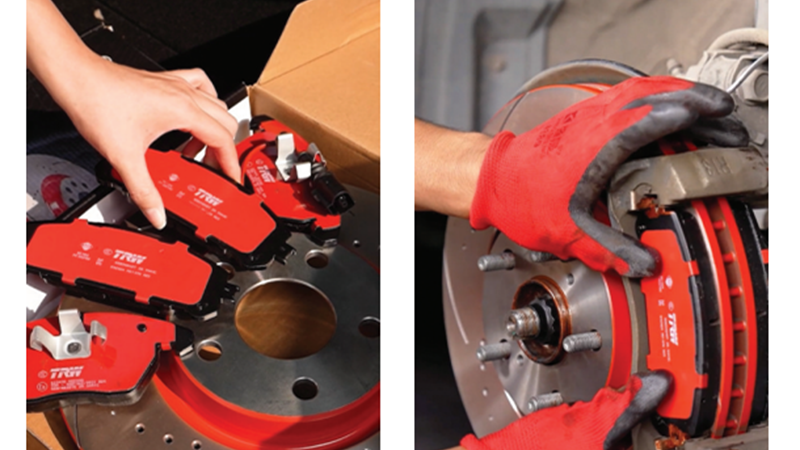
When customers ask about fitting larger brakes, McLeod encourages technicians to step back and assess the entire vehicle.
“Bigger brakes require more space, often bigger wheels, changes in offset and potentially spacers,” he says. “That affects wheel bearings, suspension geometry and tyre clearance.”
Increased braking force also raises questions around tyre grip, master cylinder capacity and suspension control under heavy braking. Without addressing these areas, a perceived upgrade can quickly introduce instability or unpredictable behaviour.
Finally, McLeod highlights smaller but often overlooked braking services that can improve reliability and customer satisfaction. Replacing worn pad fitting kits, inspecting piston dust seals and exercising caution with disc skimming all help maintain braking performance without compromising safety.
“Braking should always be viewed as a complete system,” he concludes. “When workshops understand that, and communicate it clearly to customers, they protect not just the vehicle, but their own reputation as well.”