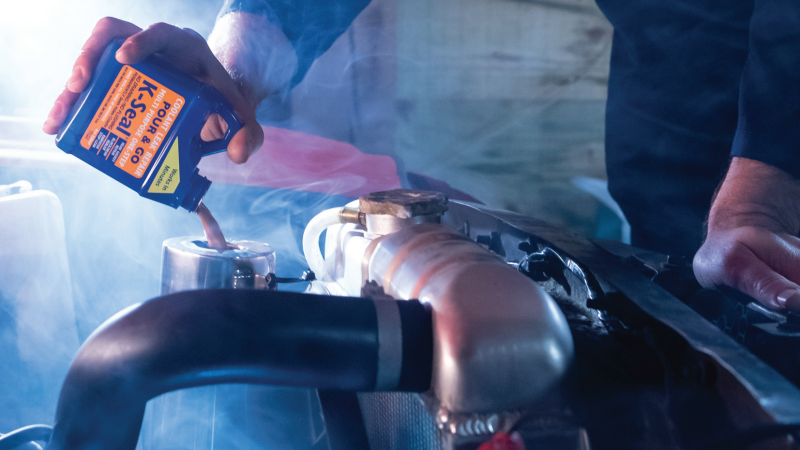
Kalimex, the UK distributor of K-Seal, explains why they think K-seal is the coolest kid on the “block”.
Since the early days of combustion engines, motorists have suffered from cooling system leaks. Apart from air-cooled engines, most combustion engines are water cooled so it’s crucial that the cooling system functions efficiently to maintain the correct engine temperature and avoid problems caused by overheating. The smallest coolant leak can rapidly become a major engine problem, especially when coolant levels plummet.
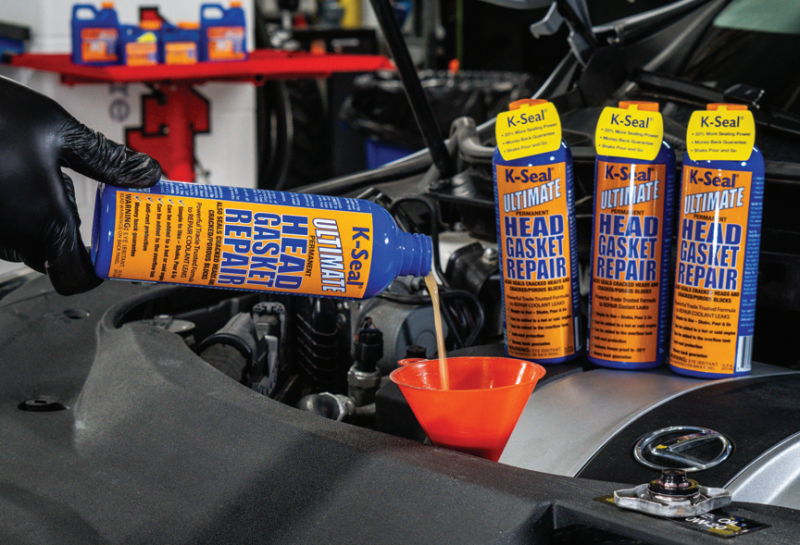
Modern cars naturally have fewer cooling system problems. However, as the average age of vehicles continues to rise, so will coolant leak issues, including radiator leaks, heater matrix leaks, and the dreaded head gasket failure. The workshop costs to repair such leaks run into the thousands, often exceeding the value of the vehicle. At this point, a mechanic or motorist should consider using a cooling system stop leak.
Given the market is awash with these products, choosing the right one is important. Choose on lowest price and the problem is likely to persist. So, what’s your starting point?
Chemical considerations
Coolant Stop Leak technology has come a long way from the days of cracking a raw egg into the radiator or dissolving a pellet of dubious looking powder into the coolant. Modern stop leak formulas use advanced ceramic technology which is more than a temporary fix to get you home. They can affect permanent repairs in cracked heads and head gaskets.
One option is to use Sodium Silicate (Liquid Glass), a chemical that around the time of the Second World War, was found to seal leaks in the block and head of water-cooled engines. The drawback? Sodium Silicate should not be mixed with Ethylene Glycol (antifreeze) as it can cause coagulation, resulting in serious cooling system blockages. Liquid Glass products are usually identifiable as clear liquids and must be added to the coolant in precise ratios and sometimes just to water. Ironically, Sodium Silicate has in the past been used to permanently disable engines (for example on military vehicles left in the field) by adding it directly to the engine oil.
Ceramic micro fibre technology
Modern coolant stop leak formulas incorporate ceramic micro fibres in the formula which are strong enough to make permanent repairs – even to blocks, heads, and head gaskets. These ceramic fibres are inert and therefore do not react with the chemicals found in anti-freeze formulas. They can be added safely and directly to any coolant mixture. With 14 million units sold worldwide, K-Seal Permanent Coolant Leak repair pioneered this technology. It is now the best-selling coolant leak repair in the USA. It is also the only product in the UK to have been independently university tested to meet ASTM D3147, the coolant leak repair standard.
When selecting a coolant leak repair product for customers, always check the formula and make sure the product meets the standard. You can rest assured that K-Seal Permanent Coolant Lead Repair ticks every box with bells on.