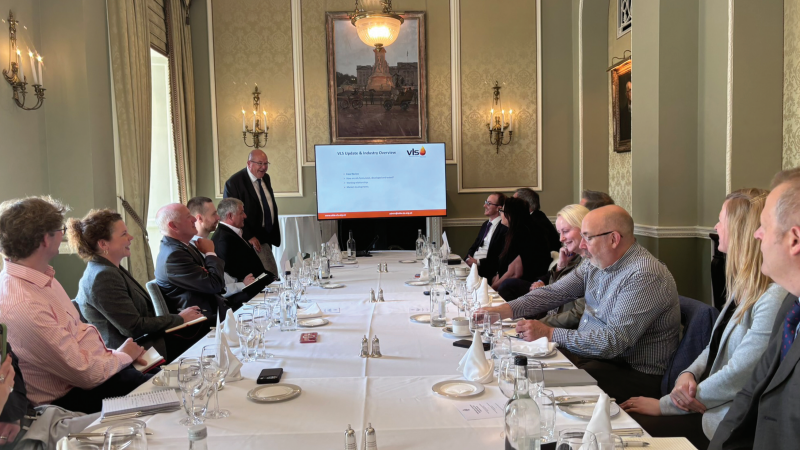
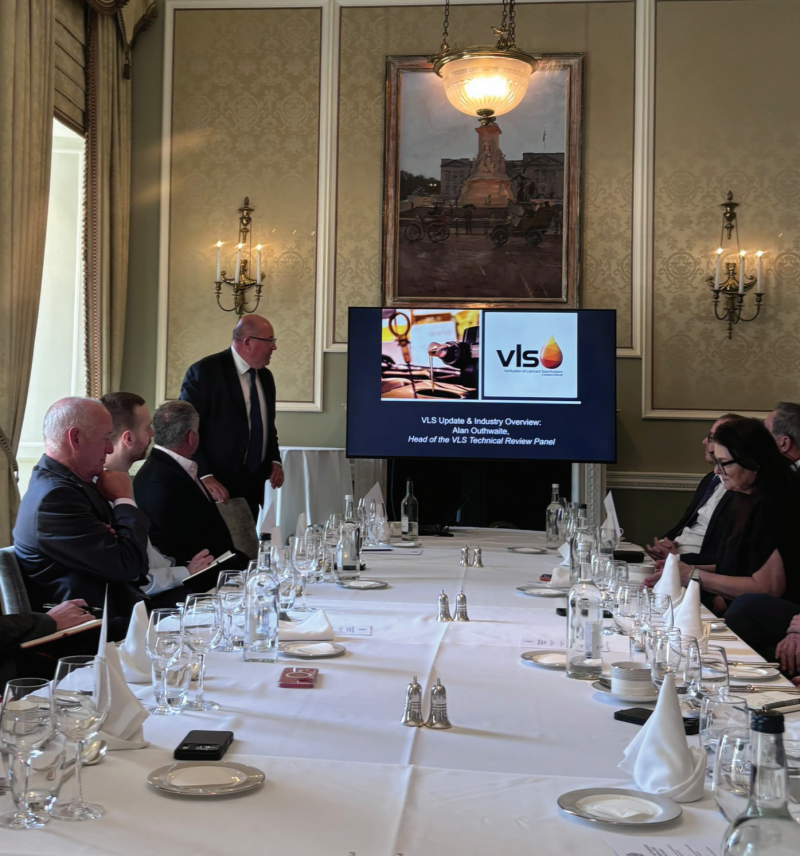
VLS’ biennial industry lunch took place recently, as ever at London’s RAC club, the spiritual home of automotive gatherings.
This year’s VLS lunch landed at just the right time to capitalise on a rare moment of general interest in the oil industry, what with prices rising due to the blockade of the Strait of Hormuz. What’s more, the past year has seen more automotive oil related drama than most, as the Trade Remedies Authority found concrete evidence of oil dumping in the UK from Lithuania and the United Arab Emirates, with heavy duties now being levied. What’s more, the EU went one step further and sanctioned several companies for “materially supporting Russia’s military and industrial complex”. It will perhaps come as no surprise that the companies behind the UK ruling of oil dumping and the companies found by the EU to be supporting Russia’s war against Ukraine are one and the same and mostly, if not all, coalesce around the same people.
Before you get the wrong impression, none of this was discussed at the VLS lunch – although, as wrong-doing seems to come in packages, the company in question did in fact make an appearance. Considering, however, that this overly cheap oil, whose proceeds are being funnelled into Russia, has taken the aftermarket by storm in recent years and has been paraded on flashy stands at Automechanika Birmingham and Frankfurt, the one clear takeaway from the VLS lunch resonated more strongly than it usually would: If it’s too good to be true, it usually isn’t.
The VLS, or the Verification of Lubrication Specifications is an industry body that sits within the wider UK Lubricants Association. It was set up specifically to provide recourse to engine oil suppliers, garages and members of the public who want to raise an issue regarding the quality or marketing claims of a given motor oil or lubricant. Typically, cases would consist of an oil blender selling an oil for a specification it doesn’t meet, hasn’t been tested for, or hasn’t been updated to meet the current spec. It’s a vital organisation in an area otherwise overlooked. But as the events of the past year have shown, there is a need sometimes for a robust organisation and the VLS has proven itself to be that organisation.
A tale of two cases
On hand on the day was the VLS’ new chairman Darren Frogson, technical director Alan Outhwaite and former chairman, (and vice president of the UKLA), Mike Bewsey. Mike is also the CEO of Duckhams Oil (Stop the press! Since the lunch and the writing of this article, Mike Bewsey has in fact stepped down from his role as CEO of Duckhams!). The team went into some detail on two particular VLS cases from the previous year for the benefit of the assorted journalists. Both were cases that had been covered in the pages of PMM before.
The first concerns a specification for Stellantis oil, specifically designed for belt-in-oil applications. Many of you will throw your hands in the air at the mere mention of belt-in-oil, but there are a lot of them around and it would be better to keep them going rather than let them get destroyed. Alan described to us the paradox of the design, in which a polymer belt is immersed in hot oil, leading to degradation of the belt. This was known to the manufacturer, but the timeframe in reality turned out to be much shorter than anticipated. Fuel economy is improved by the design, but oil changes need to be more frequent.
An update to the specification came in June, along with updated guidance that the belt be replaced every six years or 62,000 miles. VLS received 15 referrals regarding new oils claiming to meet the Stellantis specification, the concern arising from the fact that there had been very few formal approvals from Stellantis and that there was no market general technology available from the additive companies to make the specification. The fear was that companies were playing “fast and loose and claiming a specification that can’t be supported”.
This is all highly technical, of course, but the outcome was that the VLS found that four of the oils on sale were unable to demonstrate that they met the specification and have since been pulled from shelves. A further seven were meeting an outdated specification. It’s an illustrative case of the typical work the organisation does: Cleaning up the market from an experienced, trained standpoint. After all, garages and drivers are not expected to know what additives specifications are and aren’t available, so it’s good to know the VLS has got them covered.
The second case involved a brake fluid from Mannol which didn’t meet the minimum safety specifications. The brake fluid was referred to the VLS and they did three separate tests on it, resulting in a failure each time. Important to note is that the testing team at the VLS are never told who produced the sample they are testing. Once Mannol had been notified, they provided an updated sample to show that the fluid had been corrected. This, too, failed. “You’ve got a safety critical component which was obviously been failing for years,” as Alan put it. The brake fluid has been recalled, and PMM put it to the VLS that without their work on the matter, it might still be available to buy? “Yes, it would still be there,” they responded. “It frustrated us how long it was on the shelf and we were looking at what other levers can we pull or push to raise this as a priority because it was quite a frightening product, a safety critical product like that.”
Lastly, to the response of laughter in the room, PMM asked whether the VLS themselves thought they were doing a good job, to which company secretary David Wright responded with what we consider undue humility: “I think we could always do better. I think we can go further, faster and be more influential.” If the cases discussed are anything to go by, they seem to be doing alright so far.