
Apex Auto Parts has assembled seven things that you and your customers need to think about when it comes to cylinder heads
Most garage customers never think about what happens inside their engine until something goes wrong. Yet one part quietly controls how well an engine breathes, burns fuel, and stays cool: The cylinder head. Understanding this component can help you help your customers spot early warning signs, make smarter repair decisions and avoid costly breakdowns down the road.
The cylinder head is the gateway that controls airflow in and out of your engine. Air and fuel enter through the intake valves, combustion happens and exhaust gases exit through the exhaust valves. Without a properly working cylinder head, your engine cannot run efficiently, or sometimes at all..
1. It keeps the engine sealed and running efficiently
One of the most important jobs of the cylinder head is sealing the combustion chamber. Each time fuel burns, it creates intense pressure. The cylinder head must contain that pressure so the energy pushes the pistons down and powers your vehicle. If the seal fails, that pressure escapes. The result is lost power, poor fuel economy and rough engine performance. A well-functioning cylinder head ensures every drop of fuel is used effectively, which directly affects how smoothly and economically a car runs.
This is why a healthy cylinder head matters for everyday driving. It keeps your engine producing consistent power while protecting overall efficiency.
2. Heat helps it work – but too much heat can destroy it
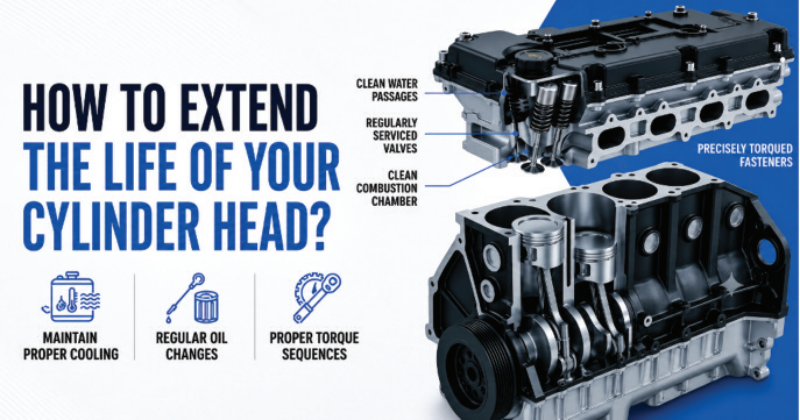
Engines need heat to operate. Combustion only happens because of high temperatures inside the cylinder. The cylinder head is built to handle this heat while also helping move it away through the cooling system.
The problem starts when temperatures climb too high. Excessive heat is one of the leading causes of cylinder head failure. When an engine overheats, the head can warp, crack, or develop leaks. Once that happens, the seal weakens and serious engine damage can follow.
Common causes of overheating include low coolant levels, a failing radiator, or a stuck thermostat. If your temperature gauge climbs into the red, it is always best to stop driving and let the engine cool. Continuing to drive an overheated engine is one of the fastest ways to ruin a cylinder head.
3. The head gasket plays a critical supporting role
The cylinder head does not seal the engine on its own. It relies on the head gasket, a thin but vital layer that sits between the cylinder head and the engine block.
The head gasket keeps coolant, oil, and combustion gases separated and in their proper channels. When it fails, these fluids can mix or leak. A blown head gasket often shows symptoms such as white exhaust smoke, milky-looking oil, loss of coolant, or overheating.
A failing gasket can also damage the cylinder head itself if ignored. That is why drivers should treat any sign of a head gasket problem as urgent. Catching it early can mean the difference between a manageable repair and a major engine rebuild.
4. Aluminium vs cast iron why does the material matter?
Aluminium heads are lighter and release heat more quickly. This helps reduce overall vehicle weight and lowers the risk of overheating. Most modern engines use aluminium for these reasons. The trade-off is that aluminium can be more sensitive to warping under extreme heat.
Cast iron heads are heavier but extremely tough. They handle high pressure and heat well, which is why they appear in many older engines and heavy-duty applications. The downside is the added weight, which can slightly reduce fuel efficiency.
5. SOHC vs DOHC design affects performance and repair
These terms describe how the camshafts are arranged inside the cylinder head, and the design influences both performance and repair complexity.
SOHC stands for Single Overhead Camshaft. It uses one camshaft to operate both intake and exhaust valves. This design is simpler, often more affordable to repair, and reliable for everyday driving.
DOHC stands for Double Overhead Camshaft. It uses two camshafts, allowing for more valves and better airflow. This typically delivers more power and higher performance, but the added complexity can make repairs more involved.
Neither design is universally better. SOHC favours simplicity and efficiency, while DOHC favours performance. The right choice depends on what you want from your vehicle.
6. Why is correct fitment non-negotiable?
A cylinder head that is not an exact match may fail to seal properly, leading to leaks, poor performance, or further engine damage. It can also throw off timing and airflow, which affects how the entire engine runs.
7. Repair or replace? understanding your options
When a cylinder head develops problems, you generally have two paths: repair or replace. The right choice depends on the type and severity of the damage.
Minor issues, such as a small crack or a warped surface, can sometimes be repaired through machining or resurfacing. This is often more affordable and works well when the damage is limited.
More serious damage, such as deep cracks, severe warping, or repeated failures, usually calls for a full replacement. While replacement costs more upfront, it often provides a more reliable, long-term solution.