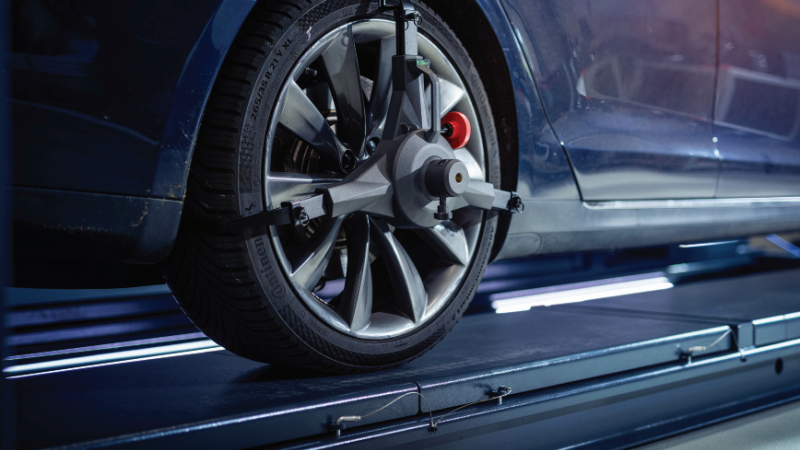
David Coppins, technical sales representative at Meyle UK discusses the role worn or damaged suspension components have in the overall alignment of a vehicle.
A wheel alignment can only be as good as the components holding the wheels in position. Meyle explains why technicians should look beyond the alignment machine when diagnosing uneven tyre wear, steering pull or poor straight-line stability.
Wheel alignment is often viewed as a straightforward workshop procedure: Measure the angles and make the necessary adjustments. However, if steering or suspension components are worn, damaged or incorrectly fitted, simply adjusting the alignment may not solve the problem.
Wheel alignment depends on the steering and suspension components being in good condition and holding the wheels in their correct positions. Worn or damaged components can change camber, caster, toe and other alignment angles, sometimes only when the vehicle is moving or under load.
A range of steering and suspension faults can affect wheel alignment, including worn control-arm bushes, ball joints, tie rods and tie-rod ends, as well as worn wheel bearings. Bent control arms, steering knuckles or suspension struts can also alter alignment angles, while broken or sagging springs and worn strut mounts can affect the vehicle’s geometry.
External impact
External damage is another potential cause. A significant impact with a pothole or kerb, or a previous accident, can bend components sufficiently to change the alignment, even when the damage is not immediately obvious.
Carrying out an alignment without addressing these issues first can result in inaccurate or unstable readings. Although the vehicle may initially appear correctly aligned when it leaves the workshop, the settings can change again once it is driven. The result could be uneven tyre wear, pulling to one side, an off-centre steering wheel or poor straight-line stability.
The key principle is that alignment should be treated as the final adjustment, not as a way of compensating for worn or damaged mechanical components.
When a vehicle presents with uneven tyre wear, steering pull or an off-centre steering wheel, technicians should first establish the symptoms before inspecting tyres and wheels. Tyre pressures, tread wear, wheel condition and any signs of abnormal wear should all be checked.
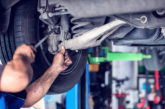
This should be followed by a thorough inspection of the steering and suspension system. Technicians should check ball joints, tie rods, tie-rod ends, control-arm bushes and wheel bearings for excessive play, while also looking for damaged or deformed components. Springs, shock absorbers, struts, mounting points and ride height should also be assessed.
Defective components
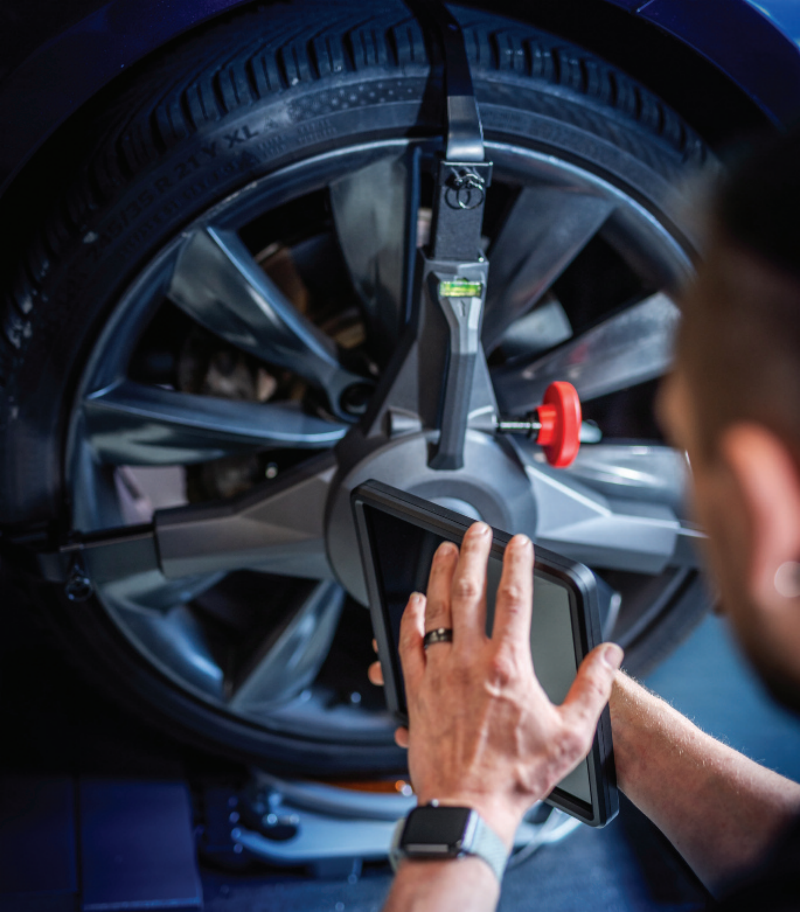
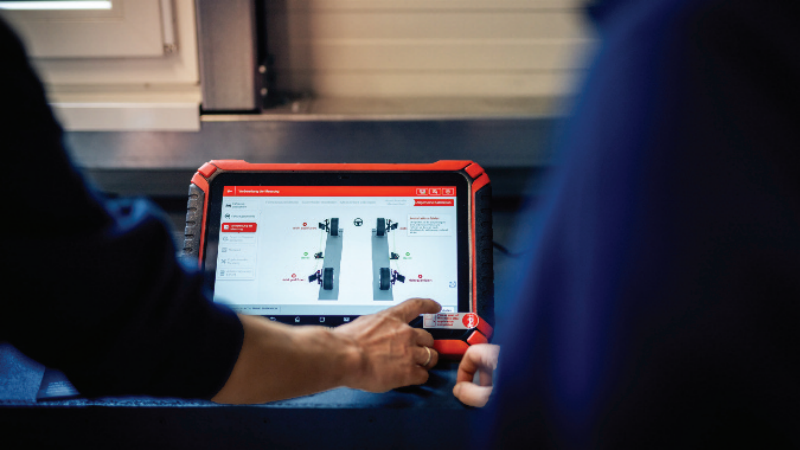
Any defective components should be repaired or replaced before the alignment is carried out. The vehicle should then be correctly prepared, alignment measurements compared with the manufacturer’s specifications and any necessary adjustments made. Final readings should be checked, the steering wheel centred and, where appropriate, a road test carried out.
On modern vehicles, completing the alignment may not be the end of the job. Advanced Driver Assistance Systems (ADAS), including lane-keeping assistance, traffic-sign recognition and emergency braking systems, rely on cameras and other sensors to understand the vehicle’s position. Changes to wheel alignment can alter the vehicle’s direction of travel in relation to a camera, meaning calibration may be required after an alignment. Technicians should therefore check the vehicle manufacturer’s requirements and carry out ADAS calibration where necessary.
The recommended sequence is simple: inspect the steering and suspension, repair any faults, perform the wheel alignment, centre the steering wheel, calibrate ADAS where required, and carry out a final functional check.