Comline has stated strut mount replacement should be a routine job for a professional technician, however, it is one carrying safety and performance implications if not handled correctly.
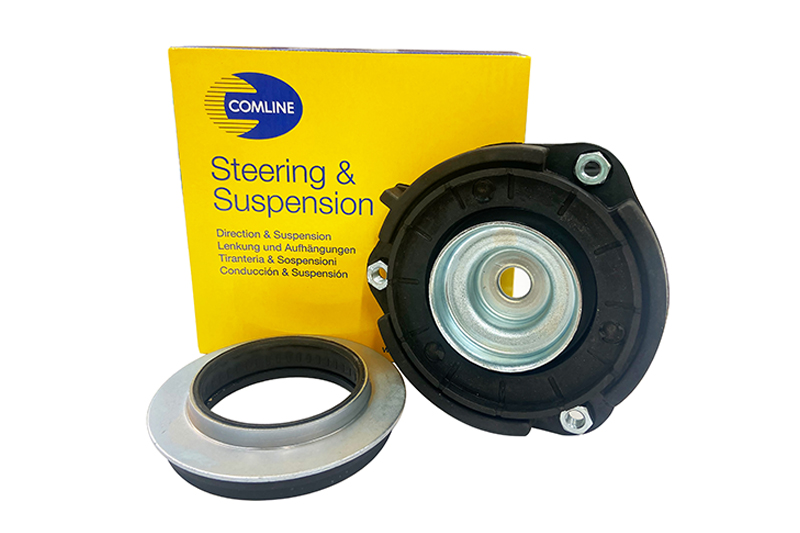
A top strut mount connects the suspension strut to the vehicle’s body, shielding the cabin from road noise and vibrations while acting as the steering system’s pivot point. It uses rubber to absorb shocks and integrated bearing, if required, to facilitate smooth rotation.
If fitted incorrectly, it can lead to excessive noise, poor handling, an uncomfortable ride and even lead to worn or damaged parts, causing a knock-on effect to other parts of the steering and suspension system.
Because of this, Comline has outlined four best-practice guidelines:
Use a spring compressor: Always compress the coil spring during assembly and reassembly. A suspension spring holds a significant amount of stored energy, so if the top mount is removed without correctly compressing the spring, it can release with explosive force. Comline encourages workshops to upsell spring compressors when fitting or replacing strut mounts.
Torque to manufacturer specifications: Use a calibrated torque wrench and follow OEM values precisely to avoid premature wear, mount failure, noise complaints and returns. Incorrect torque, irrespective of over or under, can compromise both bearing integrity and suspension geometry.
Match the mount to the strut type: Not all mounts are the same. Bearing-type mounts allow rotation with steering input, while non-bearing mounts are a fixed design. Supplying the incorrect type can lead to stiffness, noise or even early failure, so confirming the right one is important.
Replace mounts in pairs: Replacing both sides balances the suspension’s response, should improve ride quality, reduce strain on new components and extend the overall service life of the mounts.
Comline has 212 top strut references in its all-makes range, with a three-year/36,000-mile warranty accompanying every one. This complements a steering and suspension category.
Comline’s latest range update includes a rack end and stabiliser link for the Honda Civic (2016-onwards), tie rod end for the Toyota Hilux (2015-onwards) and suspension arm for several vehicles (Volvo XC90, X40 and V90, Hyundai Accent (2017-onwards), BMW 3 Series and X5).