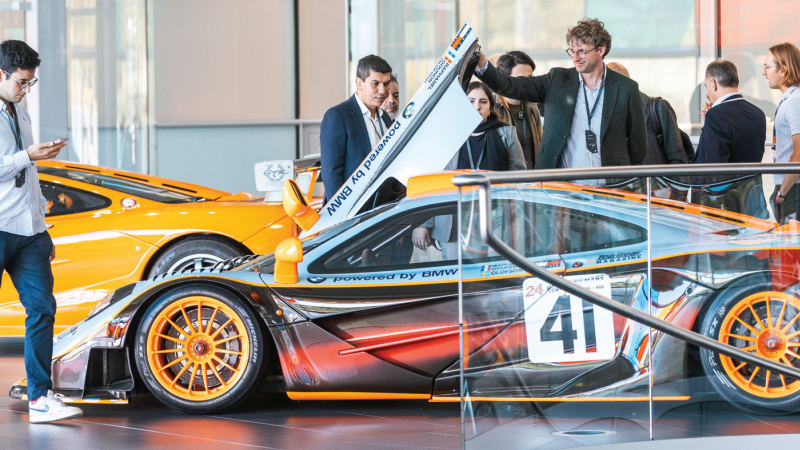
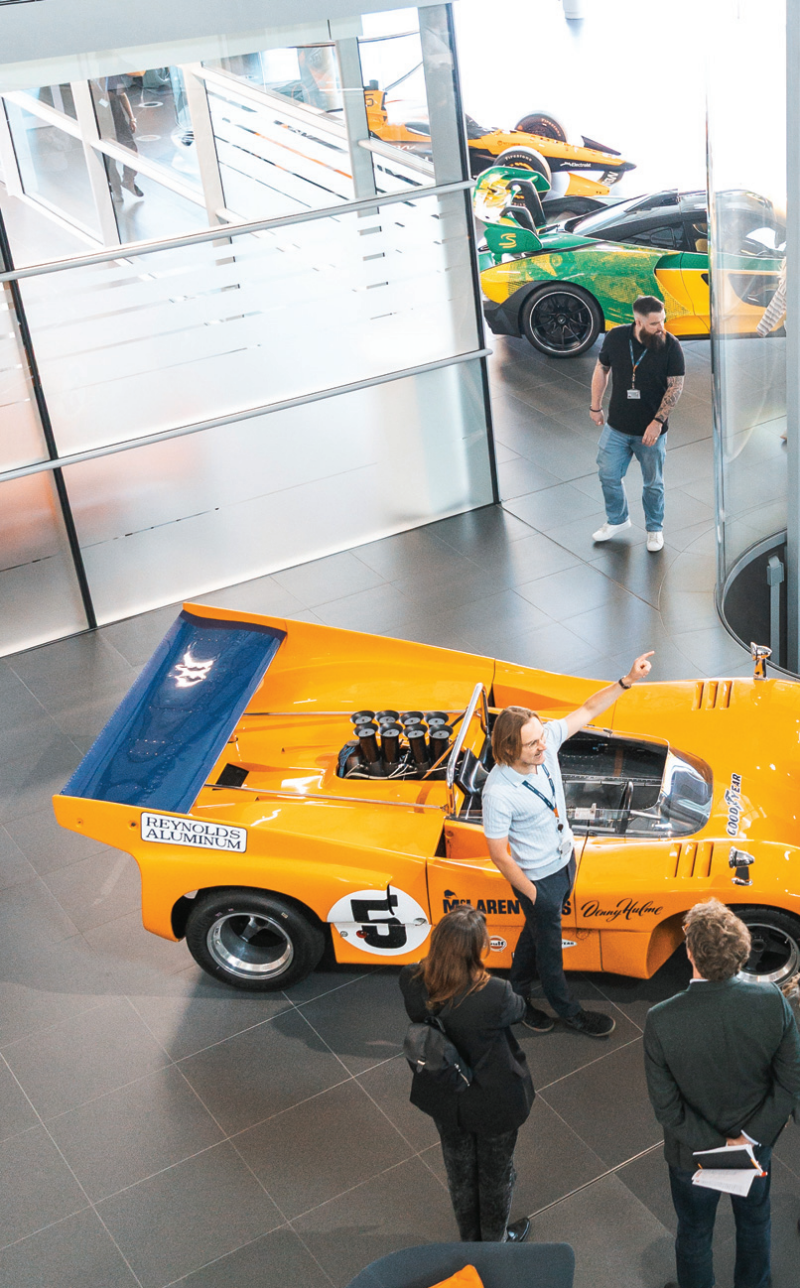
Motul recently threw open its doors to a team of international journalists to find out what’s behind its recent partnership with McLaren and what the more sensibly paced world of road cars can learn from the rubber burners in Formula One.
Those of you who keep up-to-date with Formula One will know that there have been a series of controversial changes lately surrounding hybrid engines and how the battery is used and charged throughout each race. Coincidentally, this has a direct impact on the gearbox and the oil within it – which is exactly what Motul is now supplying the McLaren race team with. Call it a cross-channel success story.
“The duty cycle for the gearbox has changed significantly with the new regulations. There are significantly harsher loads going into the gearbox now” McLaren’s chief technical officer and chief designer, Rob Marshall tells us over a quick coffee before we set out on a tour of the car maker’s HQ in Woking. “We see a different wear pattern on the teeth within the gearbox as the wheels get reversed to charge the electric motor. We need more protection for the teeth.”
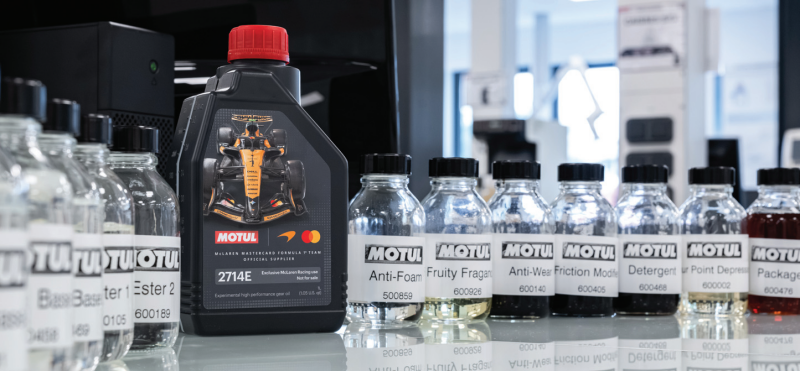
It’s not the only issue thrown up by the rule changes – recovering and deploying energy from the battery now becomes another headache for the team principal to deal with, the racing needs to feel as natural as possible to the drivers. “What it means to us here,” Rob continues, “is that we have to make sure every bit of energy available to us is used correctly. Where once we could overcome inefficiency by using a bit more fuel, now we’re at the limit, so we need to prevent any unnecessary energy loss. Losing energy out the back of the engine and not on the wheels is bad news for us.”
Critical choice
Solving both of these issues is where Motul comes in, as Marshall explains “We seek oils that not only protect our gears and our internals more, but we also need something which lowers frictional losses. Add to that, we want an oil which doesn’t generate too much heat. These are the kinds of marginal gains we talk about in F1. They don’t sound like a lot, but when a one per cent difference in performance is enough to put one car ahead of another, the oil we use is a critical choice for us.”

Post tour, we found ourselves in the car park with a brief moment to accost the more than accommodating designer once more with our questions. I asked whether, given that F1 cars now had to take so much care over efficiency rather than pure performance, the new cars weren’t that slightest bit closer to the cars driven by the mere mortals on the M1? “They’re still a bit of a special case, I think. We want the oil to look after the materials in the gearbox, and we’ve got really expensive materials in our gearbox. We’re cost-capped too, so we don’t want to change the gearbox willy-nilly, we do want it to last. However, the technology we’re developing with Motul could read across to passenger cars quite well, I think. At the end of the day, we’re just trying to do the same things as passenger cars but better. If oil development allows you to run smaller teeth, use less metal in your gearbox, have a lighter gearbox, lighter cars, then that does translate to road cars being better. If you reduce the efficiency through reducing losses on a road car, that means you burn less fossil fuels in a year.”
Raising the game
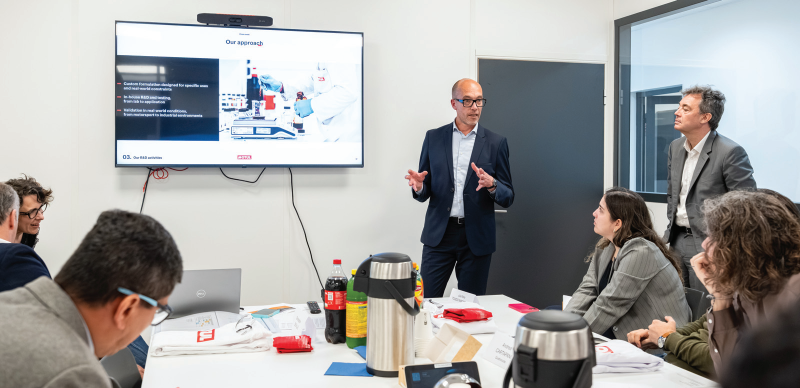
Over in France, at the Motul HQ just outside of Paris, we spoke to Julien Plet, head of R&D at Motul, about the partnership and what it meant for the oils company. It’s in keeping with Motul’s racing pedigree, of course, but does this latest partnership bring new challenges in an era of hypersensitive margins? “The compactness of the transmission oil in Formula 1 is extreme. I’ve never seen that before. The weight of the transmission, the components and the volume of the oil inside is minimised as much as possible to reduce the fluid drag of the oil and increase performance. The pressures the oil is under are enormous – Gigapascals of pressure. The new hybrid regulations mean the gearbox can be under instantaneous torque and the oil needs to stand up to this.”
McLaren won the Constructors’ Championship last year and Lando Norris took the Drivers’ Champion award, so Motul had a lot to live up to. Something which must have weighed heavily on the technical team devising the oil to present to the race team: “Yeah, it was daunting for sure!” Laughs Julien, with the tentative ease of an Arsenal fan who has seen his team pass through hell to finally clinch the cup – which, incidentally, also describes the Frenchman after spending
“You’re talking about one of the most iconic F1 teams in the paddock, and the team is full of some of the most talented and innovative engineers I’ve met. They really know what they’re talking about and they have helped us immensely. It’s very much been a collaborative approach.”
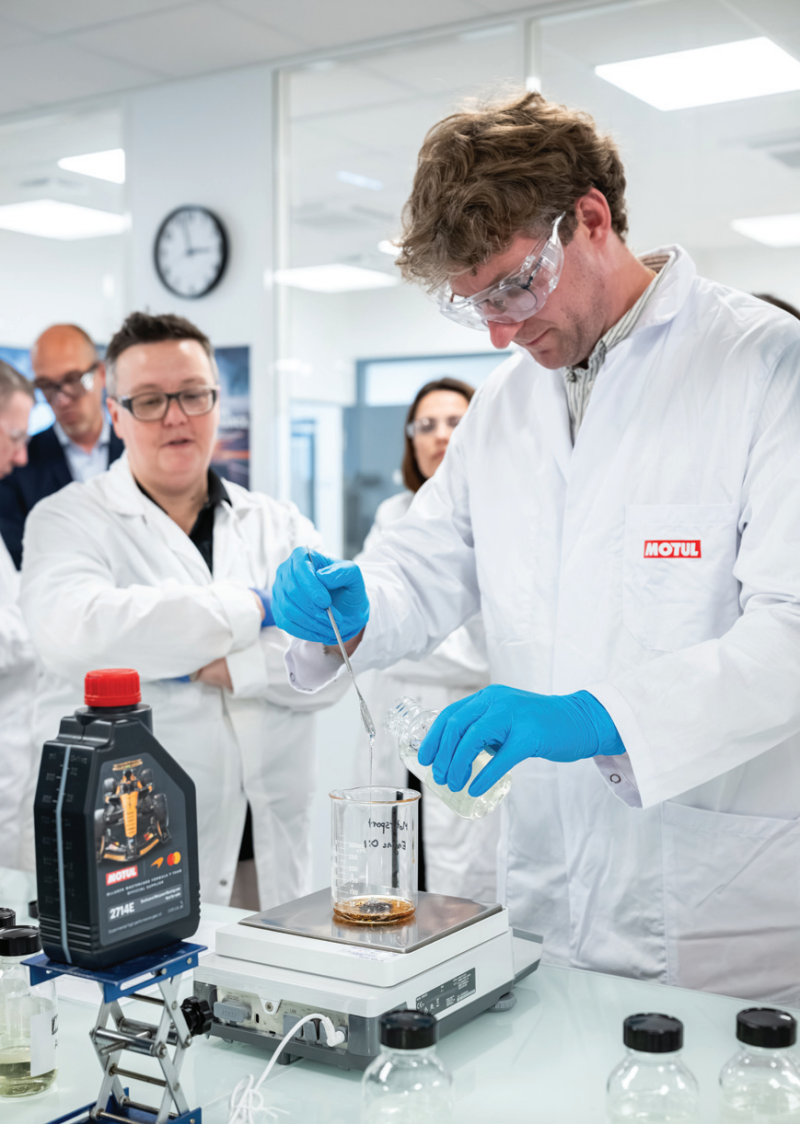
Before we were ushered into the laboratory where we could tinker around with our own oil (don’t worry, we were assured our efforts would never see the inside of any engine-powered vehicle), we just had time to get to the heart of what this was all about. Sure, Motul’s partnership with McLaren is exciting and provides Motul with new technical challenges to overcome, proving the technical expertise that goes into modern oils and lubricants, but what does this mean for garages and drivers? Will any of the F1 oil make its way into factors? “We tried something very innovative and out of the box with this oil, because we didn’t have a baseline to start with for Formula One. We have found some technology that we will reuse in our motorsport line very soon – watch this space!” And with that, we were stuffed into overshoes and lab coats, goggled up and set to work blending. All in a day’s work!