
Ed Cockill from Uckfield Motor Services has been back on the PMM YouTube channel recently with Elta Automotive, discussing the importance of following best practice when diagnosing and fitting wheel speed sensors.
Wheel speed sensors: You have four of them on a vehicle and they connect to various systems on the vehicle: Engine management, airbag, etc. But the main ones are the ABS and traction control units. They can detect what speed each individual wheel is going at, so if you’ve got traction issues, skidding issues, they will do lots of wonderful things to keep you on the road and as safe as possible.
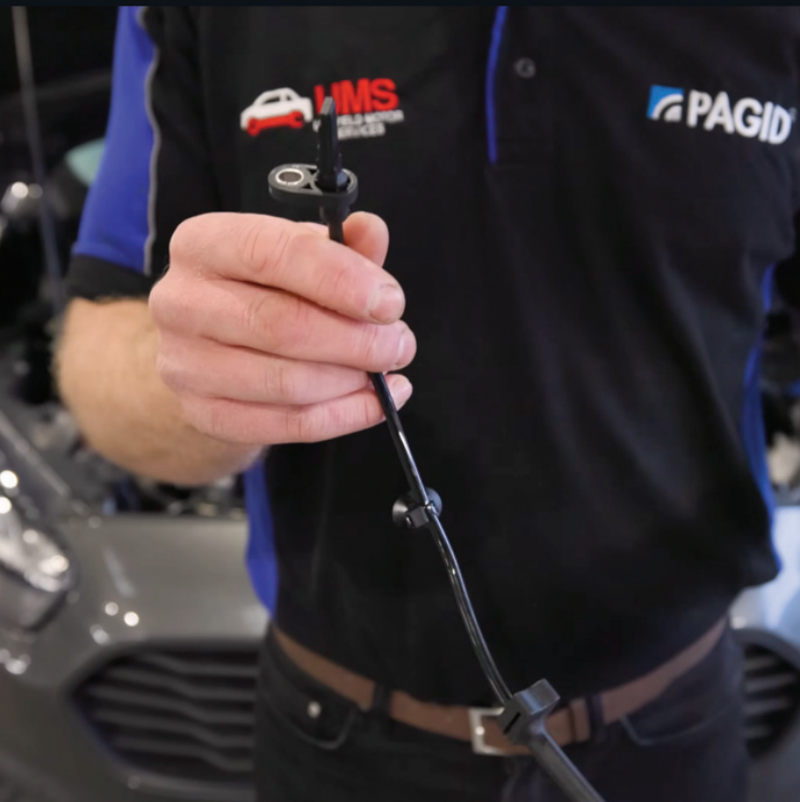
ABS sensors are one of the most commonly misdiagnosed things in the workshop. Elta Automotive VXP Pro ABS sensors have a return rate of one in 200 and most of the time there’s nothing wrong with them. There are many reasons they are sent back, but the main one is misdiagnosis. If you go off the fault codes alone, you’re going to lead yourself down the wrong track.
Diagnosis essentials
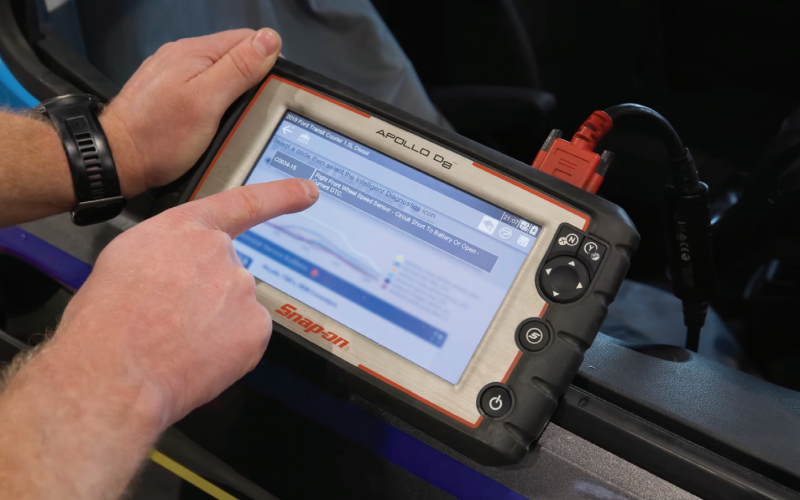
Most of the time you have an ABS light on or a traction control light or something along those lines. The first step is to get it in the workshop and carry out a full fault code scan on the vehicle. More than likely it will have some ABS sensor codes in there, but please read them in context – they don’t necessarily mean it’s an ABS sensor fault. You need to carry out thorough testing to make sure that item is faulty before firing a pass at it.
Before getting deep into diagnostics on wheel speed sensors, you need to know the difference between an active and a passive sensor. Most modern cars have active sensors these days and passive you will see on older vehicles. You can normally tell because they have a proper toothed cog on the pickup. It works by having no voltage to the sensor and it uses the pickup just to create a voltage whereas the active normally has a permanent power source to it. You need to know the difference between them because there’s different ways of testing them.
Using the right tools
My second favourite tool in the workshop is my multimeter. These are really good for carrying out basic checks and that’s why you need to know the difference between the sensors because you can resistance check a passive sensor.
You cannot resistance check an active sensor as it will damage the sensor. Obviously with an active sensor, you can carry out voltage checks to make sure there’s voltage down to the sensor. But the best tool to use is an oscilloscope, which is my favourite tool in the workshop.
An oscilloscope is the best thing for testing any sensor, or anything on a vehicle really to be honest with you, but especially for testing wheel speed sensors because you can literally plug it straight in and see the live wave that is coming out and be able to figure out quite easily what sort of sensor you’ve got. So, if you’ve got a passive sensor, it will be a continuous sine wave, whereas if you’ve got an active sensor, it will be a square waveform.
Fitting it right
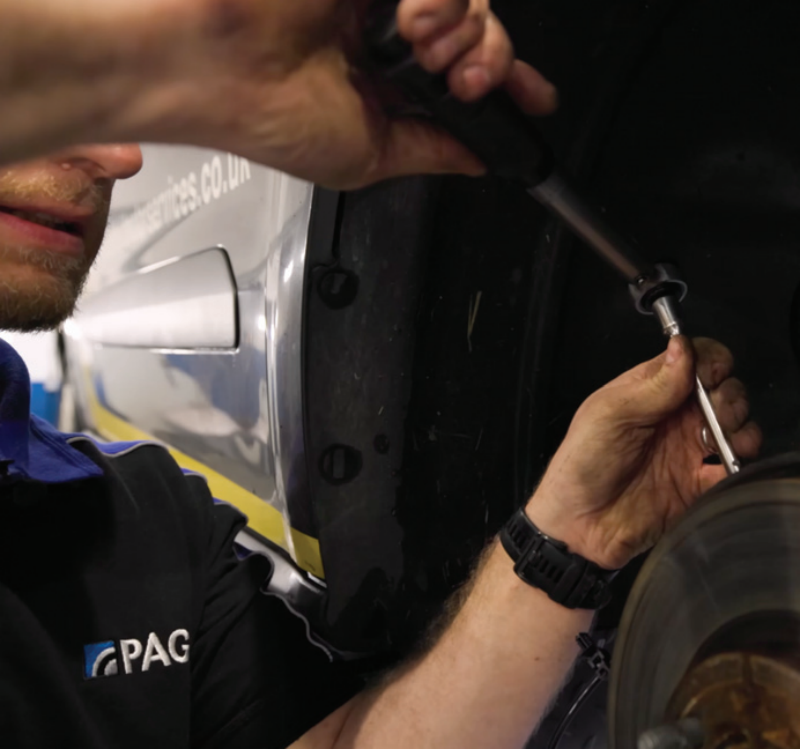
So, we’ve talked about diagnosing wheel speed sensors, but fitting them is obviously just as critical. A lot of times they get broken during fitment. The main thing is you’ve got to check the gap between the actual sensor and the pickup itself. It’s very critical.
Make sure it’s not contaminated and clean the area really well. Also torque the sensor up properly. They’re delicate plastic sensors and so they need to be torqued to the right manufacturer specifications.
Real world example
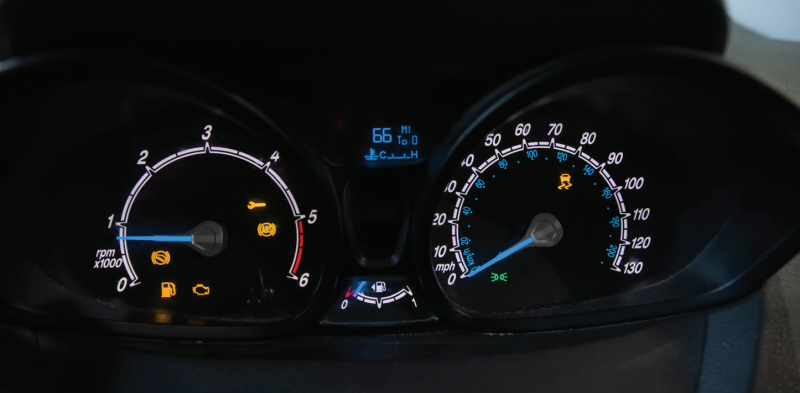
We’ve got one of my trusty old vans in today. It’s got various lights on the dash. We’re going to ignore the engine management and a DPF light, but it’s also got an ABS traction control light and a hill assist light. So, we’re going to plug it in and see what codes we got. We plugged the vehicle in, carried out a code scan on it, and as we can see, we’ve got a full code for the offside front ABS wheel speed sensor. I’m going to skip the multimeter part and I’m going to go straight to a scope because, as I said, it’s my favourite tool in the workshop.
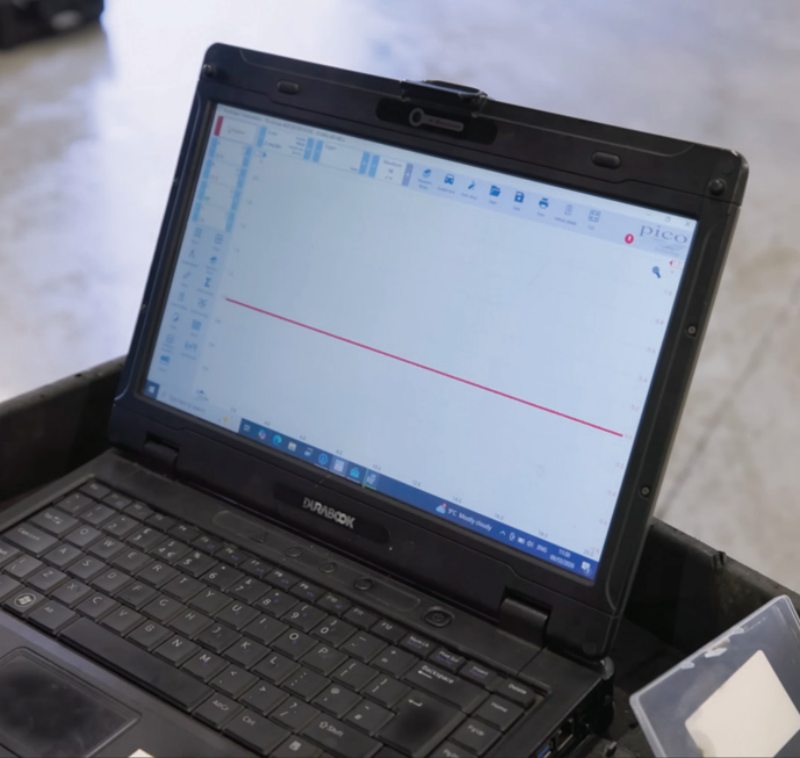
Fig.1
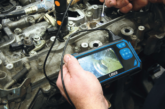
As you can see on the screen (Fig.1), there is no waveform at all on this. But for a bit of context, what we’re going to do is we’re going to show you the other side so you can see what a waveform should look like on this vehicle. So, the waveform we’ve got here is a square waveform (Fig.2). So, we know this is an active sensor. This is a really good test to see what type of sensor you’ve actually got. We’re doing some non-intrusive testing or any resistance testing so you won’t damage the sensor. We’re now going to get the correct part. We’ve cross referenced it, made sure it is the correct part for the vehicle. We’re going to now fit it using the correct methods.
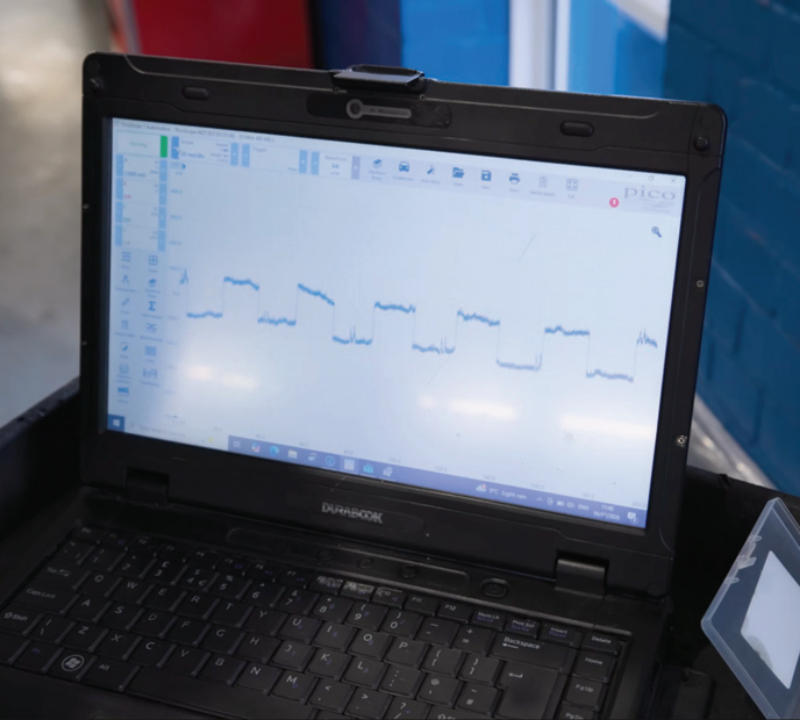
Fig.2
Verdict
VX Pro, we’ve used them for many years and all their products are really good. We barely have a return rate. That’s probably because we do a correct diagnosis procedure in the workshop. They are OE-quality matching products. They’ve got a really wide range for all engine management sensors and solenoids or EGR valves, bits and bobs like that. So, yes, I can really vouch for them and say that VX Pro is a good quality product.