PMM’s high-flying fault finder Ben Johnson has recently swapped high-blood pressure for high voltage and ditched the Bavarian blue and white roundel for something a little more future-facing. As our unwitting optimistic soon found out though, the past is never far behind.
After returning from four months of parental leave, I found myself staring into the professional mirror and realising I was, rather inconveniently, standing still. My time at Schmiedmann had its merits, but the ceiling was about as low as the headroom in an old 3 Series – particularly when it came to anything remotely electrical. High-voltage training? Not a chance. In an era where cars are rapidly turning into rolling laptops with door handles, that’s a bit like trying to become a pilot but refusing to learn what the buttons do. So when the opportunity came along to step into something altogether more… future-facing, I didn’t so much consider it as leap at it with both feet.
Now I spend my days working on the likes of XPeng, Mazda, and GAC Aion – which, depending on your perspective, either sounds like a bold career move or the beginning of a midlife crisis involving far too many high-voltage connectors. Either way, the learning curve has gone from gentle incline to near-vertical cliff face and for once, that’s exactly the point. Every day there’s something new to get wrong, fix, and then pretend I understood all along – which, frankly, is far more satisfying than doing the same old thing and calling it experience.
Moving to Chinese brands, however, has has not made me completely immune to repairing the odd pain in the arse BMW…
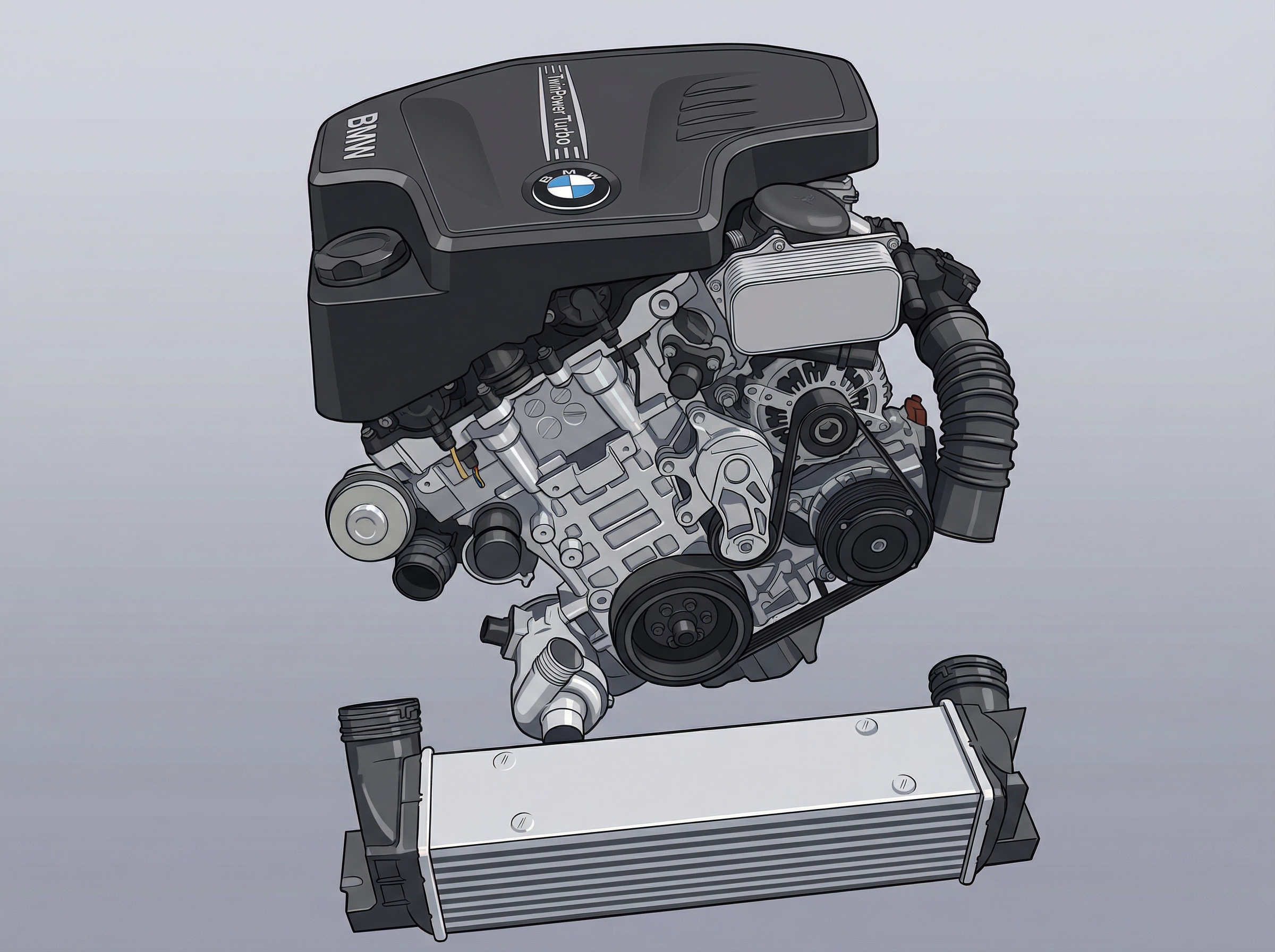
Whilst I had assumed this particular chapter in my life was now closed, I was recently provided with an unwelcome reminder of why I had moved on in the first place. I found myself, once again, staring into the engine bay of a BMW F15 X5, housing the ever-charismatic BMW N20 engine. I couldn’t help but think about that line from the Godfather: “Just when I thought I was out… they pull me back in.”
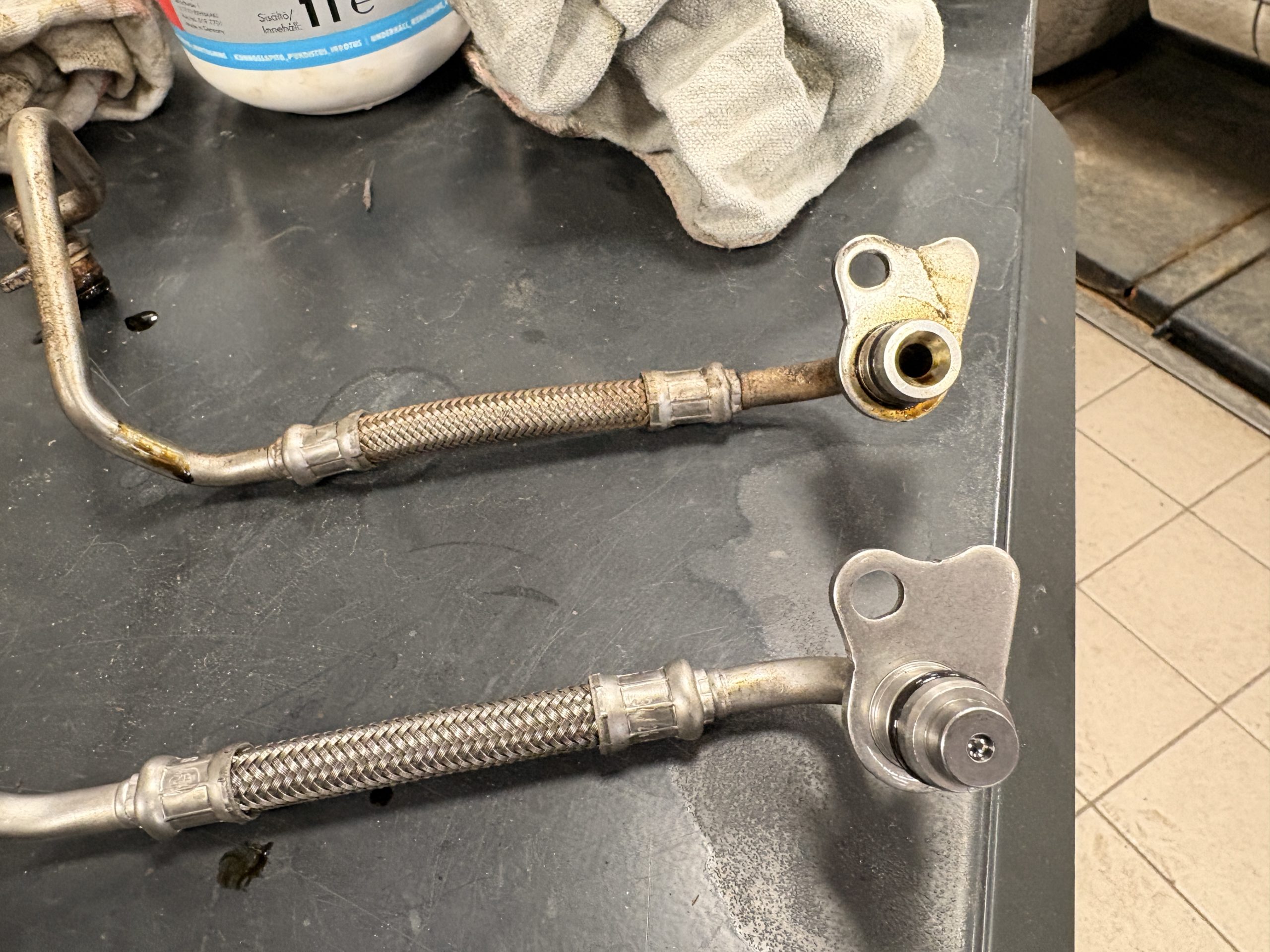
Now here’s the bit that really tickles the funny bone. This wasn’t some early N20 – one of those “we were all young once” efforts where you forgive the odd lapse in judgement. No. This was a 2018 car. By this stage, you’d expect the rough edges to have been sanded down, the enthusiastic oversights corrected and the sort of decisions that seemed perfectly reasonable in a meeting room quietly amended once reality had its say. That’s how progress is meant to work. Except, apparently, not here. Because nestled in that engine bay was the original turbo oil feed pipe – the one without a one-way check valve. A component omission so small you could lose it in your pocket, yet so consequential it might as well have been announced with a brass band. It’s a bit like discovering your “fully renovated” house still has 1970s wiring behind the walls. Technically functional, yes – but only in the same way a garden shed can be considered suitable accommodation.
Blue smoke: A subtle sign
The complaint itself was almost polite. Blue smoke on startup, but only after the vehicle had been left overnight, and gone again within seconds. No warning lights, no tantrums, no dramatic failures – just a short-lived but deeply committed impression of a Cold War-era diesel locomotive. It’s the sort of thing that doesn’t scream catastrophe, more a gentle nudge that something somewhere is making questionable life choices. Which, as it turns out, is exactly why it causes so much confusion.
At the heart of this little performance is the turbo oil feed system. In most engines, oil is delivered under pressure, lubricates the turbocharger, and returns neatly to the sump. It’s a system so well understood it barely warrants discussion. But in the N20, someone, somewhere, looked at the design and thought, “Do we really need a one-way check valve here?” And, in a moment of quiet optimism – or perhaps a particularly rushed Friday afternoon – that answer came back as “probably not.” Which is automotive engineering’s equivalent of saying, “I’m sure it’ll be fine.” It wasn’t (Fig.2).
Did I ever mention I hate engineers? No? Well, I do – there, I’ve said it. Not all of them, of course. Just the ones who look at a job like this and think, “Yes, that’ll go together nicely,” despite the fact it quite clearly won’t unless you intervene with glue, patience and a strong will to live.
Oil settling in the turbo
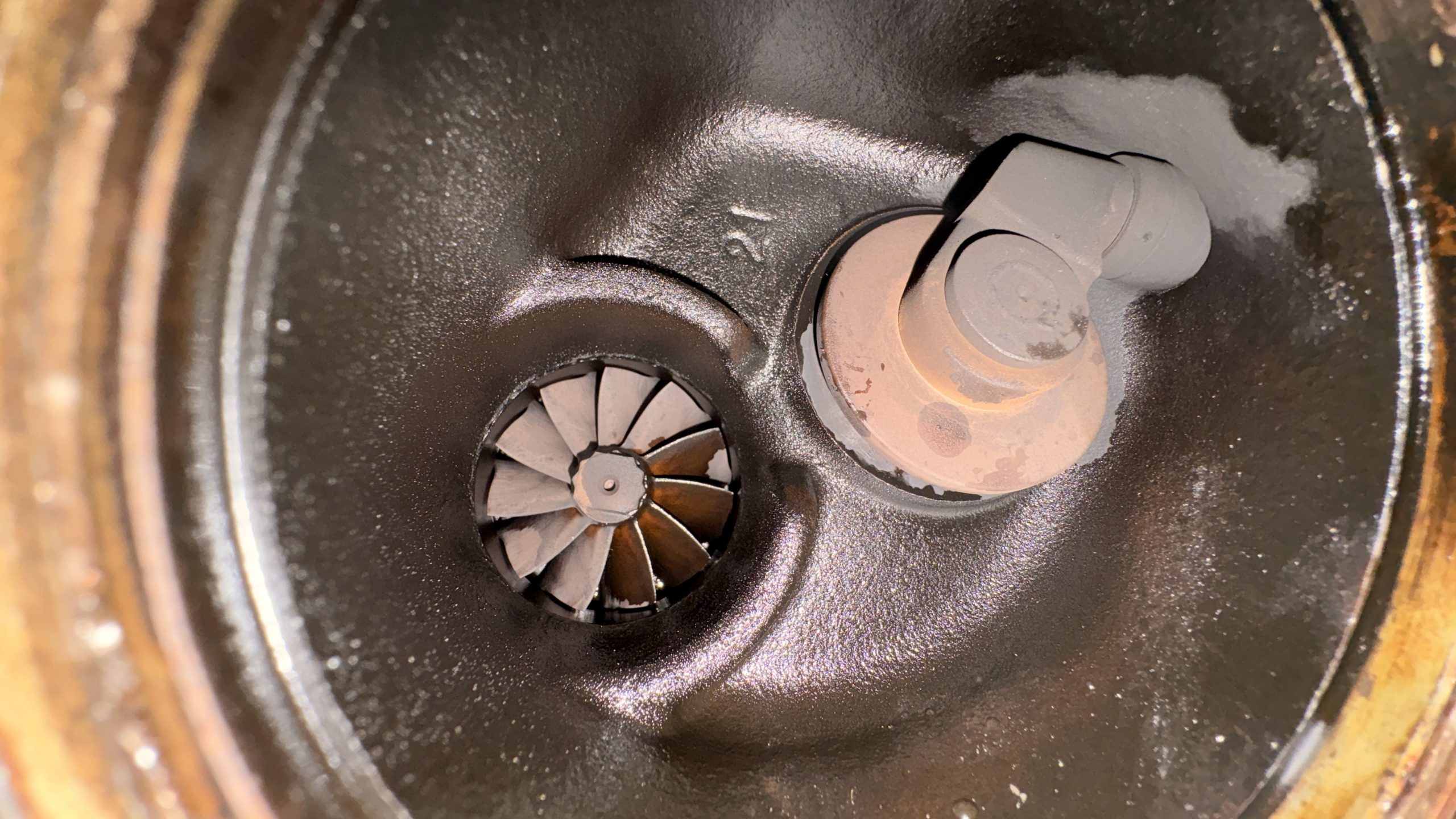
Once the engine is switched off, oil pressure disappears. Without a check valve to keep things in order, gravity takes over – methodically redistributing oil into places it was never invited. Over several hours, oil settles inside the turbocharger, creeps into the intake and exhaust pathways and pools in the exhaust system itself. All of it happening slowly, quietly, and with the sort of determination usually reserved for damp in a Victorian house. By morning, the engine isn’t just lubricated – it’s been quietly marinating (Fig.3).
Then comes the startup. The engine fires, the turbo spins and all that carefully misplaced oil is suddenly introduced to heat. The result is immediate: a cloud of blue smoke that suggests the vehicle has spent the night experimenting with alternative fuels. It’s dramatic, it’s unmistakable, and then – almost as if nothing happened – it disappears. Which is precisely why it’s such a delightful little diagnostic trap.
Because when this lands at your average independent – let’s call them Joe Smith’s Tyres & Exhausts – things begin to unravel. The customer reports smoke on startup. Joe starts the car. Nothing. Starts it again. Still nothing. No fault codes, no obvious issues, no reason to suspect anything particularly sinister. So Joe does what any competent technician would do – he starts thinking. Turbo seals, valve stem seals, crankcase ventilation. All perfectly logical avenues. All about as helpful as a sat-nav in the middle of the ocean. Because the real issue isn’t failure. It’s design. Or, more accurately, the absence of a very small but very important piece of it.
Putting the solution into practice
BMW’s solution, when it eventually arrived, was almost insultingly simple. A revised oil feed pipe, now fitted with a one-way check valve. That’s it. No sweeping redesign, no complex workaround – just a small component quietly doing the job it should have been doing all along. Fit the updated pipe and the transformation is immediate. No overnight oil migration, no morning smoke, no confusion. Which makes the presence of the original pipe on a 2018 vehicle feel less like an oversight and more like a gentle, ongoing joke.
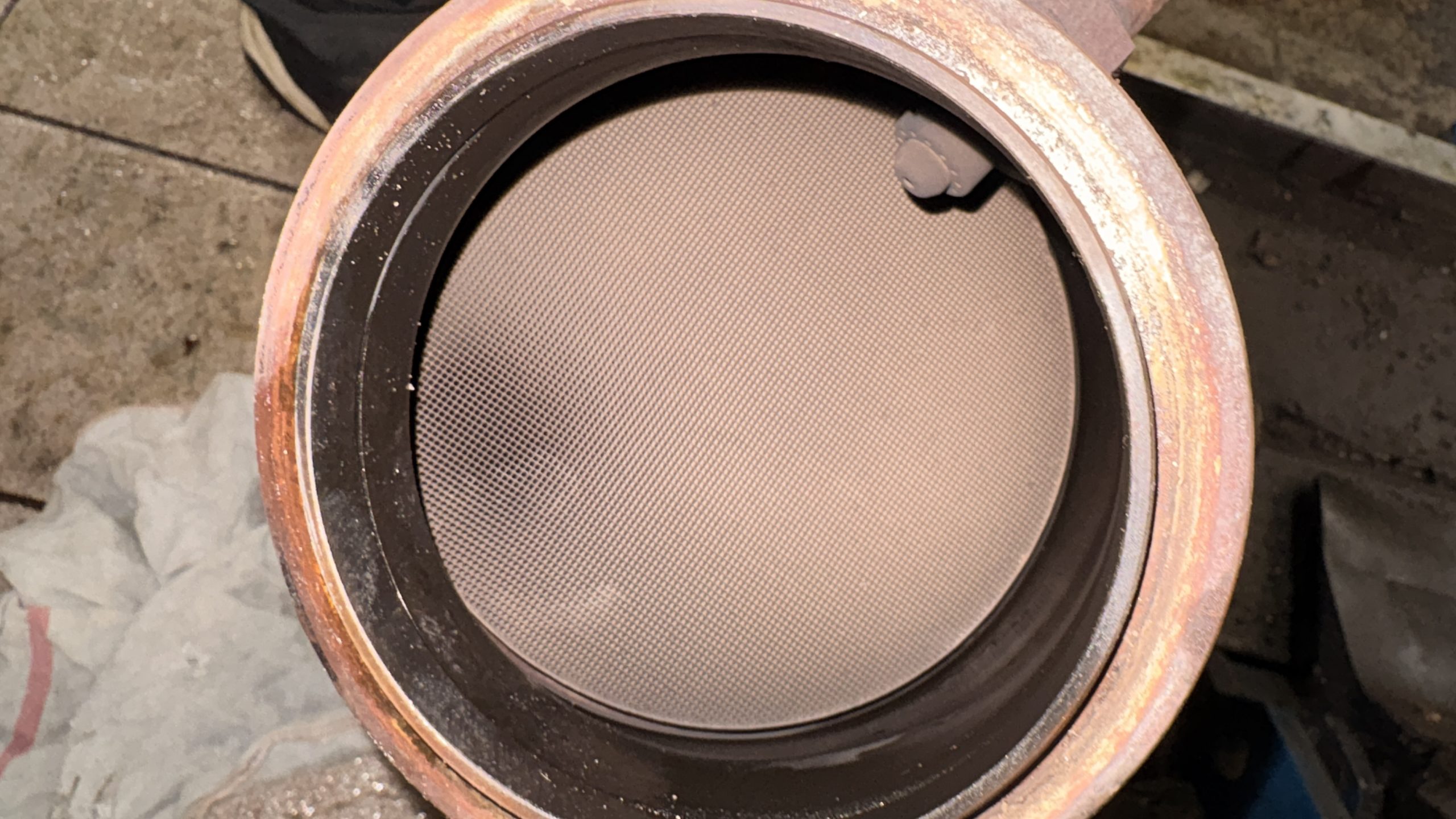
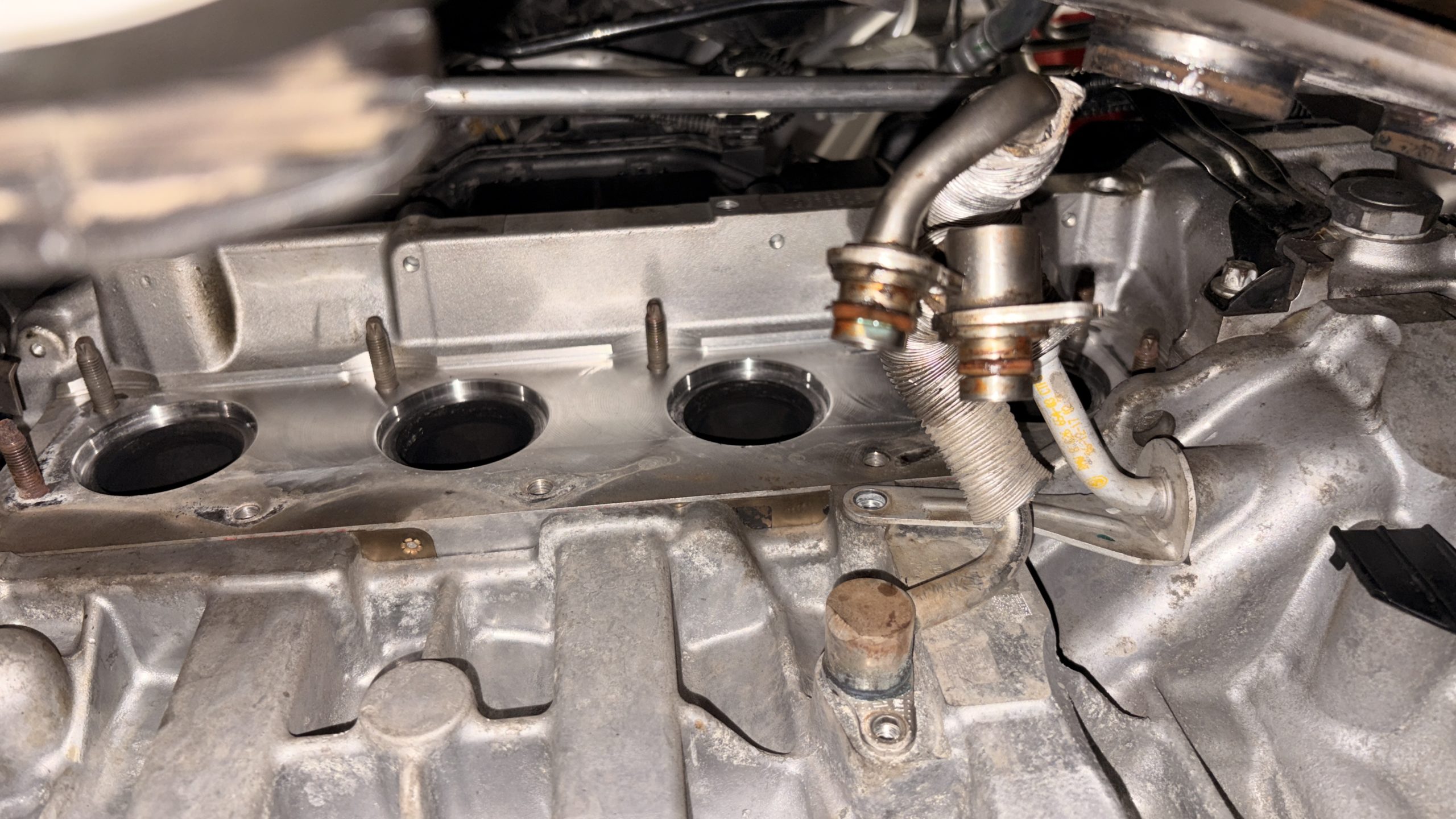
Of course, identifying the issue is one thing. Replacing the pipe is another. Because this is an BMW F15 X5, and access to the turbocharger appears to have been designed by someone with a deep appreciation for inconvenience. Clearances exist more in theory than reality, heat shields cling on with quiet defiance and component placement suggests serviceability was, at best, a passing consideration. It’s not a job you rush. It’s a job you endure, one awkward movement at a time (Fig.5). And just to raise the stakes slightly, this wasn’t a customer car in the usual sense. It was a sales vehicle. Which means there’s no room for interpretation, no tolerance for theatrical smoke displays and certainly no opportunity to explain it away as “a characteristic.” When a car greets a potential buyer by recreating a minor industrial incident, something has to be done. Properly.
What makes this whole episode so wonderfully frustrating is its simplicity. There’s no catastrophic failure here, no dramatic mechanical destruction. Just a missing check valve. And yet that tiny omission leads to confused customers, misguided diagnostics, unnecessary parts replacement and a general sense that something isn’t quite as clever as it thinks it is. All from a component that costs less than a decent sandwich. So there I was, working on newer systems, different manufacturers, quietly convincing myself that things had moved on. Instead, I’m back under the bonnet of an N20, dealing with a problem that should have been resolved years ago. Because these things don’t go away. They linger. They wait. And just when you think you’ve finally left them behind… they pull you back in.