Talking is no longer enough when it comes to facing the skills gap, so says Simon King, CEO, Autotech Group.
The automotive aftermarket has spent the last decade talking about skills shortages. In 2026, that conversation is no longer enough. The issue is no longer awareness, but risk. Accelerating vehicle technology, tightening legislation and sustained workforce pressure have combined to make capability a defining factor in the sector’s future.
Recent figures from the Society of Motor Manufacturers and Traders (SMMT) show the UK new car market has exceeded two million registrations, with almost one in four new cars now fully electric. This reflects strong momentum, even as petrol and diesel vehicles continue to dominate much of the existing parc.
For the aftermarket, the challenge is not electrification in isolation, but the growing complexity across a mixed powertrain vehicle parc. Workshops are now expected to support vehicles equipped with advanced driver assistance systems, connected diagnostics and software-defined architectures, often within the same working day. Expectations around accuracy, safety and compliance are rising accordingly.
From skills shortage to capability gap
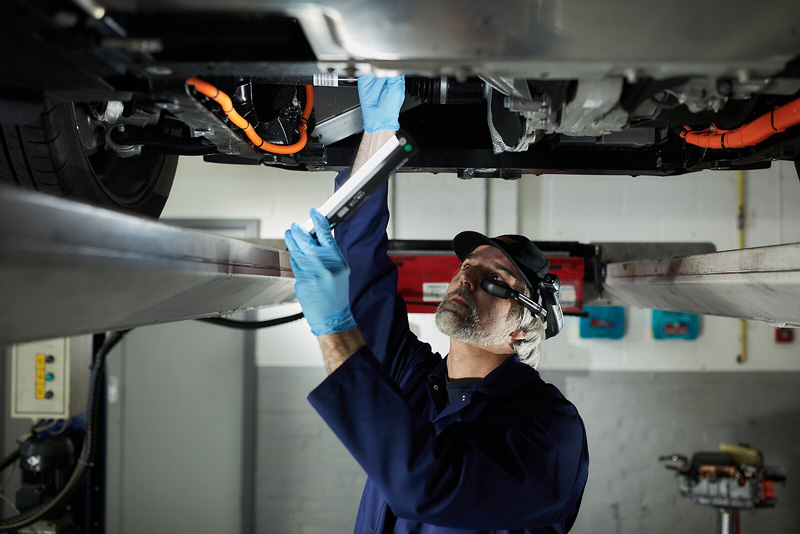
Vacancies remain stubbornly high, around 3 per cent, above the UK national average, and the workforce continues to age, But the more pressing issue is a widening gap between what modern vehicles require and how prepared the workforce is to support them. Industry data shows that while electrified vehicles are rapidly increasing, fewer than a third of technicians are currently qualified to work safely on EVs, and only a small fraction hold formal ADAS calibration qualifications. Today’s technicians must do far more than diagnose mechanical faults. They are expected to interpret data, calibrate safety-critical systems, operate manufacturer software and navigate evolving regulatory frameworks.
This is not about whether people are willing to work in the industry; it is about whether training, career pathways and workplace structures reflect the reality of modern automotive work as the pace of change has outstripped many traditional models. This also requires the industry to take a broader view of talent, recognising and retaining neurodiverse individuals whose strengths in pattern recognition, focus and logical problem-solving align naturally with the increasingly data-driven, software-led nature of modern vehicles.
Advances in AI-supported diagnostics, connected platforms and predictive maintenance are reshaping workshop operations. When implemented effectively and supported by the right skills, these technologies improve efficiency, accuracy and safety. Moreover, this also means rethinking how work is carried out, from reducing manual admin through voice-to-text reporting, to using digital workflows that allow technicians to focus on technical tasks rather than paperwork.
As systems evolve, workshops must also develop the capability to integrate new software, manage data confidently and adapt workflows as vehicles become more connected and software defined. The ability to draw on remote expertise, share diagnostic insight securely and collaborate beyond the physical workshop is becoming part of day-to-day operations, particularly as skills remain stretched.
In a safety-critical industry, human judgement remains central. Technology will undoubtedly enhance decision-making, but it won’t replace it. Technicians must still interpret outputs, apply experience and ensure compliance as regulatory expectations rise and cyber security becomes an operational concern rather than an IT afterthought. As vehicles increasingly resemble mobile digital platforms, workshops must treat secure systems, controlled access and digital resilience as fundamental to business continuity.
Legislative developments are adding urgency to this shift. The Automated Vehicles Act, alongside tighter requirements around EV safety, ADAS calibration and data access, reinforces a clear direction of travel: responsibility does not disappear as vehicles become more automated; it becomes more defined.
Why 2026 is a game changer
What makes 2026 different is the convergence of pressures. Market growth, electrification, regulation and workforce change are all landing at once. On their own, each would be manageable. Together, they fundamentally change how the aftermarket must operate.
This is no longer a discussion about future skills needs. Workforce capability now underpins compliance, access to vehicle systems, customer trust and the ability to realise value from technological investment. Treating recruitment, training and technology as separate issues is no longer viable.
As 2026 unfolds, the question is no longer whether the aftermarket understands the scale of change ahead. It is whether it is ready to operate confidently within it.