

PMM’s indignant investigator Ben Johnson explores why many modern cars sometimes give up the ghost, without even having the decency to explain why!
Modern cars are rubbish at failing properly. They no longer expire with drama or dignity. There is no bang, no puff of smoke, no heroic mechanical sacrifice. That sort of thing belonged to an era when machines were honest. Today’s car does something far worse. It simply decides not to do something such as start. You press the button and nothing happens. No crank, no click, no warning message, and very often no fault codes. The vehicle has not broken down in any traditional sense. It has just sulked.
This is one of the great frustrations of modern diagnostics. We have more computing power in a door module than the entire Apollo programme, yet the car cannot be bothered to tell you why it will not operate. The system is alive, the network wakes up, modules chatter away happily, and the scan tool reports that everything is absolutely fine. And yet the engine remains stubbornly motionless. It is a perfect example of how modern vehicles have become very clever at making decisions, and utterly hopeless at explaining them.
The reason for this behaviour lies in how modern systems are designed. Many control units are no longer looking for faults at all. They are waiting for confirmation. A digital handshake from somewhere else on the network to say that all the required conditions have been met. If that confirmation never arrives, the system does nothing. Because nothing has technically failed, no diagnostic trouble code is stored. From the vehicle’s perspective, everything is working exactly as intended. From the technician’s perspective, the car is an expensive ornament that has chosen to waste an afternoon.
This often presents itself in a familiar pattern. A no-start complaint arrives. The battery tests healthy. The starter motor operates when tested directly. Powers and grounds appear present. The immobiliser behaves normally. The network wakes up cleanly. The scan tool reports a clean bill of health (Fig.2). No faults anywhere. Yet the engine refuses to turn. The missing ingredient is not a broken component, but missing information. Somewhere in the system, a control unit is waiting for a specific signal that never arrives. It might be a safety interlock confirmation, a transmission status message, or a plausibility signal that has quietly disappeared because an input elsewhere has dropped out. Nothing is broken enough to complain, so the vehicle simply waits.
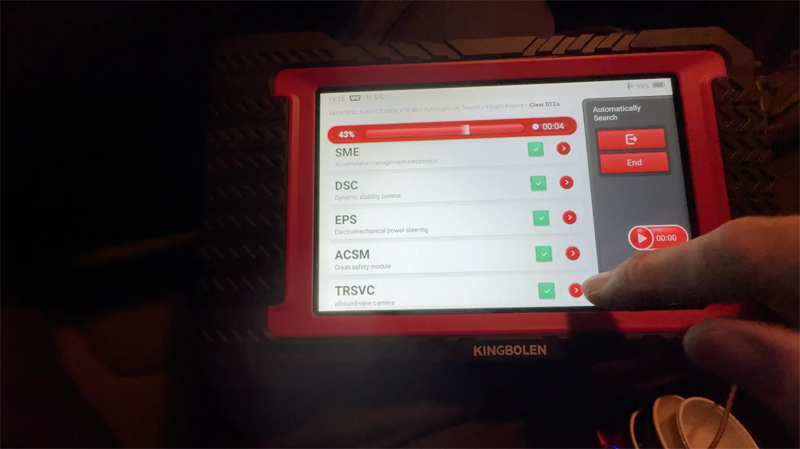
Breaking the silence
This behaviour is bad enough when the car stays silent. What makes modern cars truly infuriating is when they decide to lie. And they do lie. Confidently. With charts, graphs and fault descriptions that look authoritative enough to waste hours of your life.
A particularly good example came from a vehicle that had tormented me for some time that appeared to be reporting a short circuit on a 12-volt power supply feeding a LIN distribution module. The diagnostic fault code looked convincing. The live data trace showed unstable voltage behaviour. The fault memory supported the theory, reporting a short circuit or line disconnection on the emergency operation feed. Everything pointed squarely at a supply-side problem. This was not vague or ambiguous. It was specific, confident and wrong. That job was solved purely by looking at live data and comparing it to another car with identical architecture – it was here that a floating voltage was found. What made that job even more unusual was that the fault code would log only upon turning off the engine. Consequently, erasing the fault codes involves a key on off procedure which, somewhat ironically, causes the fault code to be logged ad-infinitum since the floating voltage hangs after the key is left off and it is during this time period that that fault was logged. You will never erase that fault in a month of Sundays until you get a handle on what’s going on.
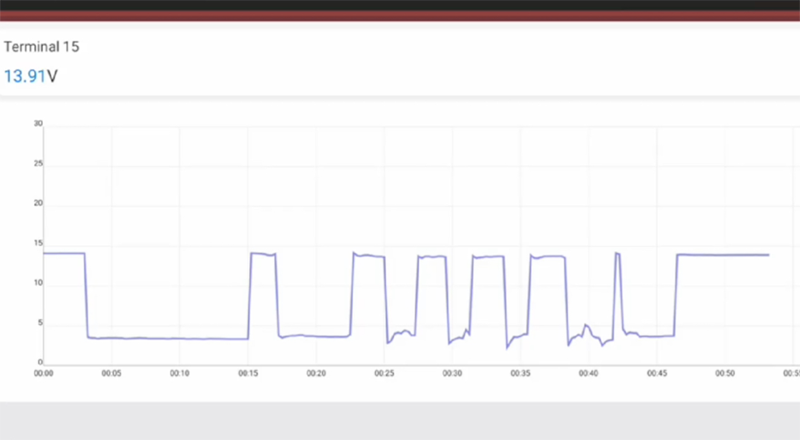
From the system’s point of view, voltage existed where it should not have been, so a logical conclusion was drawn. From the diagnostic software’s point of view, this was sufficient evidence to flag a power supply fault. From the technician’s point of view, the vehicle was not merely unhelpful, it was actively misleading. The fault description was plausible, tidy and confidently incorrect. The real issue was not a failed power feed, but a missing zero volt reference point. The system was alive, still communicating and still making decisions, but it was doing so until such a point that the real issue (the DME losing voltage due to bad ground) made itself known resulting in a total shutdown of the powertrain once a voltage minimum threshold of 9 volts was reached.
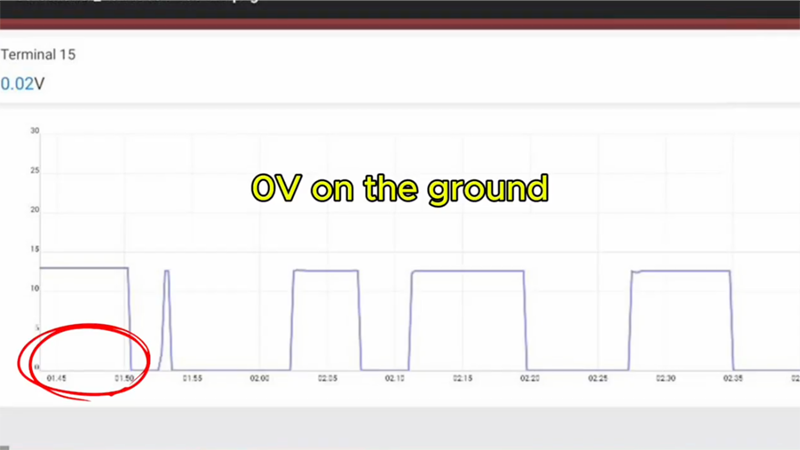
The real fault had nothing to do with a shorted power supply at all. The underlying issue was a poor ground reference elsewhere in the system. That bad ground allowed a floating voltage to feed back along the 12-volt supply line from one control unit to another. What made this especially misleading was the internal design of the receiving module. Although the relevant 12-volt supplies are sent on separate pins and wires, they were internally connected at the BDC. The result was a back-fed voltage path that convincingly impersonated a supply fault, while the actual supply was perfectly healthy.
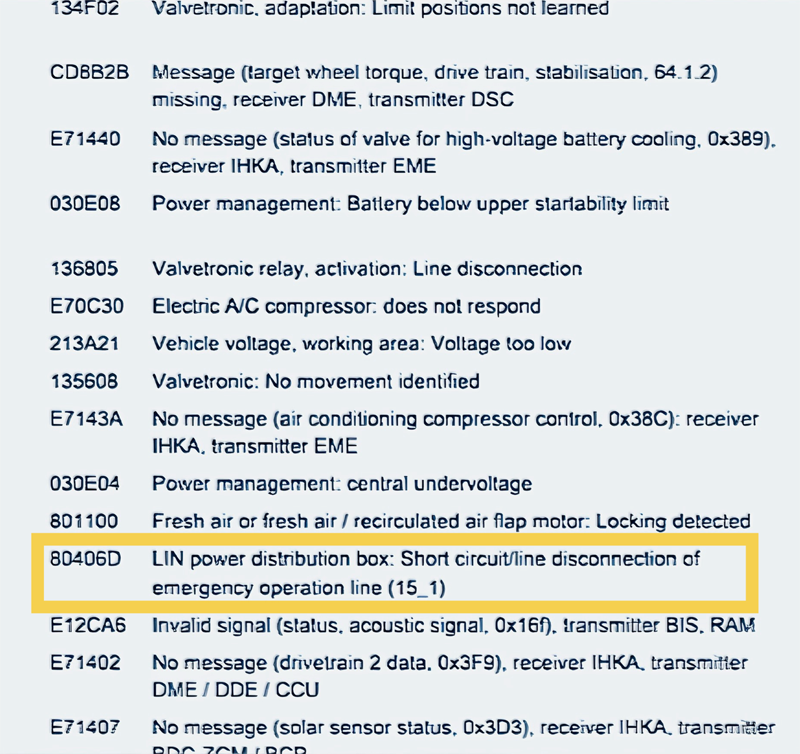
Misdirection
This is where modern diagnostics becomes genuinely treacherous. Not only do modern cars sometimes refuse to tell you why they will not operate, they occasionally present fault information that looks credible while steering you directly away from the real cause. The data is not random and it is not imaginary, but it is framed by assumptions made inside the software that do not always reflect what is happening electrically in the real world. Trusting the fault description without questioning the logic behind it can waste more time than having no fault code at all and increasingly there is little tech support or real-world knowhow to guide techs into thinking differently. Still, it seems, we have these outdated and frankly ludicrous test plans that seem to have been thrown together by the work experience lad at the R+D centre while the software engineers went out to lunch.
Increasingly, one of the most effective diagnostic tools in the modern workshop is not a scan function at all, but another identical car (Fig.6). As systems become more complex and fault strategies more opaque, comparing two vehicles built to the same specification and running the same software can reveal discrepancies that no fault code ever will. Live data that appears plausible in isolation often becomes suspicious when placed side by side with a known good example. A status flag that never quite changes state, a voltage value that hovers slightly outside normal behaviour, or a network message that arrives late rather than not at all can be invisible when viewed on its own, yet glaringly obvious when compared directly against a twin vehicle. This type of comparative diagnosis is becoming increasingly common not because technicians lack skill or information, but because modern vehicles are now designed to tolerate abnormal behaviour silently. When the system no longer tells you what it is missing, the only remaining option is to ask a second, identical car how it behaves when everything is actually right.

Guided diagnostics are of little help in these situations. They work very well when something has failed. They are almost useless when something has simply not happened. If the system never receives the confirmation it expects, there is no failure for the software to guide you toward. The scan tool insists that everything is fine, the customer insists that the car does not work, and both are technically correct. This is not a diagnostic error. It is a design problem.
Modern diagnostics is no longer about finding what is broken. It is about understanding what the system expects to see before it allows anything to happen. It requires understanding system logic rather than just wiring, networks rather than isolated circuits, and reference points rather than raw voltage values. It requires thinking, which is awkward in an industry increasingly built around screens that promise answers at the press of a button.
So the next time a modern car refuses to start, shows no fault codes and appears electrically perfect, remember this. It is not confused. It is not broken. It is waiting. And every now and then, just to make things interesting, it is lying about why.