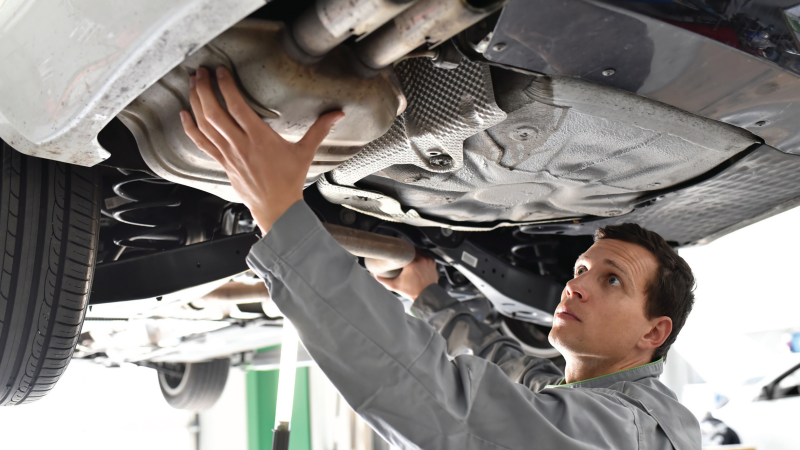
European Exhaust and Catalyst goes into depth on how catalytic converters work and what types are in use.
At European Exhaust and Catalyst (EEC), our catalytic converters are engineered to the highest standards, combining durability, performance, and environmental responsibility. Using premium materials and precision engineering, our converters help reduce harmful emissions, ensuring vehicles run efficiently while meeting strict environmental regulations.
A catalytic converter transforms toxic exhaust gases such as carbon monoxide (CO), nitrogen oxides (NOx), and hydrocarbons (HC) into less harmful substances like carbon dioxide (CO₂), nitrogen (N₂), and water vapor (H₂O).
At the heart of the converter is a honeycomb structure, coated with a wash coat containing precious metals like platinum, palladium, and rhodium. These metals act as catalysts, triggering chemical reactions that break down pollutants as exhaust gases pass through. The wash coat also incorporates rare earth minerals such as aluminium oxide, cerium oxide and zirconium oxide which enhance efficiency and durability. This carefully engineered combination ensures your catalytic converter performs optimally under all driving conditions.
Maintaining your customers’ catalytic converters properly is essential to ensure long term performance and reliability. Using the correct fuel helps prevent contamination, while addressing engine issues promptly such as misfiring can avoid overheating and costly converter damage.
Regular servicing also plays a crucial role. While unusual smells may not always indicate a serious issue (this could also be down to sulphur in fuel), noticeable dips in performance often do. It is important to ensure that oxygen sensors and the ECU are functioning correctly to maintain the proper fuel air balance. As these checks require specialist diagnostic tools, consulting a qualified mechanic is recommended.
In addition, monitor dashboard warning lights such as the “check engine” light and keeping a detailed log of maintenance and repairs will also help you schedule servicing at the right intervals and maintain optimal vehicle efficiency.
Types of catalytic converters
At EEC catalytic converters and filtration systems are engineered to meet strict emissions standards while delivering long lasting performance for the independent aftermarket. Different engine types and vehicle applications require specific emissions each designed to target harmful exhaust gases and particulates in distinct ways.
Three Way Catalysts (TWC) – Petrol Engines
Three-Way Catalysts are designed for petrol powered vehicles and are responsible for reducing three major harmful emissions: nitrogen oxides (NOx), carbon monoxide (CO), and hydrocarbons (HC). These pollutants are converted into less harmful substances such as nitrogen (N₂), carbon dioxide (CO₂), and water (H₂O) through carefully controlled chemical reactions. TWCs typically feature either ceramic or metallic honeycomb substrates, which provide a large surface area to maximise contact between exhaust gases and the catalyst coating. The substrate is coated with precious metals such as platinum, palladium, and rhodium, which act as catalysts to accelerate the chemical conversion process. EEC’s petrol catalytic converters are manufactured to meet stringent type approval standards, ensuring reliable emissions compliance and optimal engine efficiency.
Diesel Oxidation Catalysts (DOC) – Diesel Engines
Diesel Oxidation Catalysts are specifically engineered for diesel applications. Unlike TWCs, DOCs primarily focus on oxidising carbon monoxide (CO) and hydrocarbons (HC) into carbon dioxide and water. They also help reduce visible exhaust smoke and odour. DOCs use ceramic or metallic substrates coated mainly with platinum and palladium to facilitate oxidation reactions at lower exhaust temperatures. EEC’s diesel oxidation catalysts are developed to provide durable performance under high-load operating conditions typical of diesel engines, particularly in commercial vehicles.
Diesel Particulate Filters (DPF) – Diesel Engines
Diesel Particulate Filters are designed to capture and remove particulate matter (soot) produced during diesel combustion. These filters use a wall flow honeycomb structure that physically traps soot particles within porous channel walls. DPFs are commonly manufactured from advanced materials such as cordierite or silicon carbide, both chosen for their excellent thermal resistance and filtration properties. Many systems include a catalytic coating to assist with regeneration a process in which trapped soot is burned off at high temperatures to prevent blockage. EEC’s DPF range is engineered to provide high filtration efficiency while maintaining correct exhaust back pressure, supporting both emissions compliance and engine longevity.
Light Commercial Vehicle (LCV) Catalysts – Vans and Minibuses
Light Commercial Vehicles operate under heavier loads and longer duty cycles, meaning their emissions systems must be robust and efficient. LCV catalytic converters are tailored to meet the specific emissions requirements of vans and minibuses, often combining durability with high thermal resistance. These units use ceramic or metallic substrates coated with platinum, palladium, and rhodium to ensure effective gas conversion under demanding conditions. EEC provides dedicated coverage for LCV applications supporting workshops for reliability in high mileage environments.
Gasoline Particulate Filters (GPF) – Petrol Engines with GDI
With the introduction of Gasoline Direct Injection (GDI) engines, particulate emissions from petrol vehicles have become a greater focus. Gasoline Particulate Filters are designed to capture fine particulate matter in a similar way to DPF systems. GPFs feature a wall flow honeycomb structure and are commonly manufactured from cordierite ceramic material, offering effective filtration while maintaining exhaust flow. As emissions regulations continue to evolve, EEC remains committed to expanding its GPF range to ensure modern petrol vehicles remain compliant with the latest standards.
Through continuous product development and investment in advanced materials, EEC supports workshops and distributors with comprehensive emissions control solutions that combine performance, durability, and regulatory compliance across petrol, diesel, and commercial vehicle applications.