PMM hears from AJ Fleetcare, who recently received a blocked-up Citroen, and turned to JLM for help.
AJ Fleetcare have recently launched The AJ Fleetcare Training Academy, with a mission to help fellow technicians unlock and then maximise profit potential from on vehicle DPF cleaning and accurately diagnosing faults, often mistakenly attributed to the DPF. It’s a bold move that’s seeing them training technicians every month at their workshop in West Yorkshire and, most recently, in Ireland. As Alan Landale explained to PMM, winning not just one but three awards, with their latest from the Motor Ombudsman no less was, “all the motivation we needed to strike out with the AJ Fleetcare Training Academy, with our initial focus on DPF training.”
The coming months will see them expand their training programme but for now, thedemand is so significant, they’re marshalling their experience and expertise into the one day all-you-need-to-know DPF training. “It’s the ultimate all you can eat buffet in DPF training,” says Alan.
Citroen C4 Picasso Grand HDI Blue1.6l
As Jeanette Landale explained, “conducting front-of-house customer inquiries is an essential step in our procedure before assigning a vehicle to a technician for diagnosis or repair. This shines a light on how the vehicle has been maintained, including service history, oil top ups in between services and the customer’s preferred fuel brand.”
We check for prior DPF cleaning attempts and whether DPF cleaners have been added to the fuel. It’s an immediate red flag if iron-based products have been used.
“Front of house checks completed, our technician reviews the customer’s questionnaire answers. For this vehicle, we identified that the vehicle was seldom used on motorways and was filled with supermarket fuel. We also established that the customer had used a budget supermarket, iron based DPF cleaning fuel additive. This rang alarm bells as the PSA range of DPFs tend to use a soft monolith (core) which can be damaged due to excessive heat attributed to the high temperature spikes caused by iron based DPF cleaners.
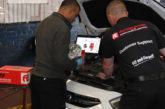
Following our DPF assessment we identified that the DPF itself was not damaged, but was heavily blocked with soot. We had fault codes p2452, p245c, p244a and p1412 (DPF pressure sensor). Monitoring live data confirmed some strange pressure readings of 1mb at idle, then 6mb, then 34mb and then 11mb. This was suggesting that in fact it was a faulty DPF or DPF sensor. A further manual test of the DPF pressure pipe using a manometer confirmed the same. So, at this stage it wasn’t looking good.
Closer inspection on the DPF itself revealed the metal thread pipe into the DPF filter had sealant around it (this is the front DPF pipe we measured the pressure from). We removed the old sensor, and the pipe fell off to reveal that the threads had previously been damaged and stripped and a repair had been attempted with a sealant. This explained why we were getting strange pressure readings.
We sourced a new pipe, repaired the threads, and fitted the new pipe. This time the pressure tests showed 82mb at idle and 158mb at higher revs. This confirmed that the DPF was in fact blocked. Live data also revealed that the Eolys tank level was low, and the engine oil was contaminated and over the maximum level.
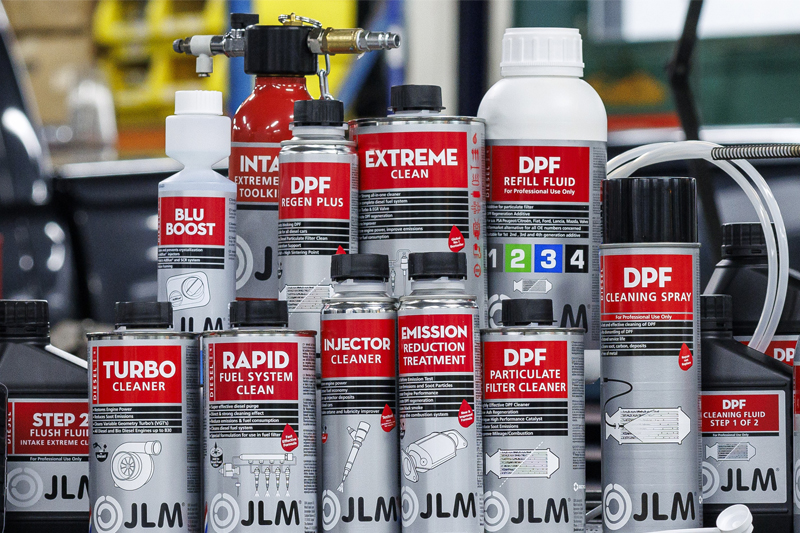
“We advised the customer on the required repairs. With his go ahead, we performed a DPF Clean using the JLM Lubricants 2 Stage Clean & Flush Toolkit. We refilled the Eolys tank with JLM DPF Refill Fluid and finally, carried out an oil change, including JLM Engine Oil Flush to remove any contaminants from the oil system. Live data monitoring now showed DPF pressure of 7mb at idle and 47mb at raised rpm. So, 100 per cent clean 100 per cent fix.
![Bosch’s ESI[tronic] diagnostic software](https://pmmonline.co.uk/wp-content/uploads/2026/03/Febi-diagnostics-tool-165x109.jpg)