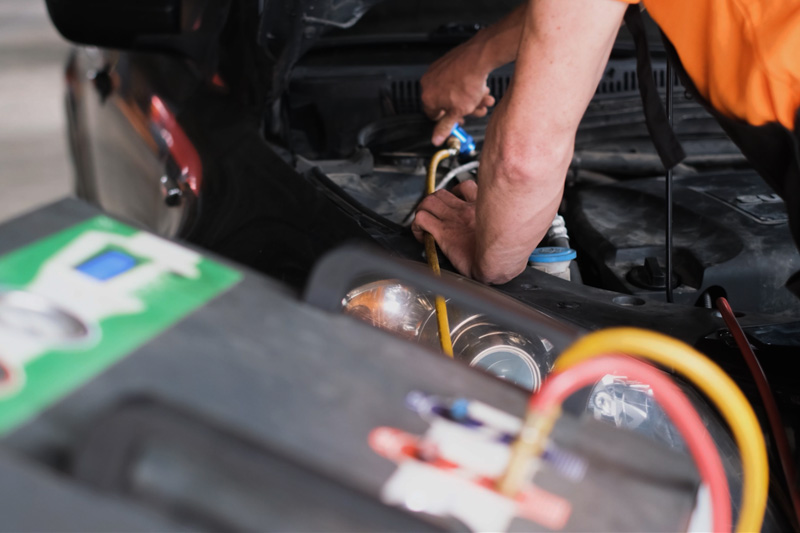
Did you that the refrigerants you’ve traditionally used in your customers’ air conditioning are being phased out? But what to replace them with to ensure an effective and easy switch? Chuck Abbott, global marketing manager at Orbia Fluor and Energy Materials, is here to discuss just that.
Automotive air-conditioning is in the middle of a major shift. While R-134a has been the go-to refrigerant for some time, it is now being phased down in the UK under The Fluorinated Greenhouse Gases Regulations 2015, due to its high Global Warming Potential (GWP).
This reduction threatens long-term availability and will lead to a subsequent rise in costs – conditions that are already driving an increase in illegal imports throughout other countries in Europe.
Technicians on the shop floor need practical, economical, and reliable alternatives that keep older vehicles compliant and operational, helping them avoid costly mistakes and protect customers’ interests.
The industry is responding with solutions such as Klea 456A, a direct replacement for R-134a that enables the automotive aftermarket to extend the service life of vehicles originally designed for R-134a. It offers a stable, practical solution amid the ongoing phase-down of high-GWP refrigerants, while reducing dependence on a product that is becoming increasingly scarce and tightly regulated.
While R-1234yf is widely used as the alternative for R-134a in most new vehicles, it is not a drop-in refrigerant and cannot be used to service older R-134a systems without significant redesign. It also presents its own challenges, including high costs, increased risk of polymerisation and the need for additional investment in system adaptations to manage its flammability.
By adopting next-generation refrigerants, workshops and garages can service vehicles more effectively, offering customers a solution that is both cost-efficient and environmentally compliant.
These benefits don’t just support day-to-day operations, they help position garages to adapt smoothly as the industry evolves under stricter emissions targets.
Guide to retrofitting alternatives to R-134a
A growing number of garages are already making the switch, with Klea 456A now adopted in more than one million vehicles across Europe.
It is a composite blend of R-1234ze, R-134a, and R-32, which delivers a GWP around 52 per cent lower than R-134a – dropping from 1,430 to 684 – while still offering comparable performance.
This lower GWP is not only better for the environment, but it also reduces exposure to escalating quota costs, making Klea 456A a more economical option as the phase-down tightens across the UK.
Klea 456A delivers further financial advantages by allowing technicians to continue using their existing tools, equipment, and lubricants designed for R-134a systems. This is because it maintains an A1 (non-flammable) classification, meaning garages avoid the additional investment and operational adjustments needed for flammable refrigerants. In contrast, alternatives such as R-1234yf often require new workshop equipment, updated safety procedures, and system modifications due to its A2L classification – meaning it’s flammable and non-compliant with 134a systems – all of which add cost.
What’s more, because Klea 456A contains R-134a, any small amount of mixing with the old refrigerant will not damage the system, reducing the financial risk of servicing vehicles with unknown service histories. Best practice, however, remains a full replacement of the refrigerant and updating the system’s refrigerant label. This relabelling – usually found under the hood or on the A/C system – identifies the new refrigerant type, ensuring future servicing uses the correct refrigerant and protecting garages from costly mistakes or system damage during the changeover period.
Perhaps most importantly, Klea 456A is readily available through major distributors across the UK. This gives garages a stable, legal, and cost-controlled alternative to R-134a at a time when its price is becoming more volatile and supply more uncertain.
Klea 456A also helps futureproof workshops against emerging environmental legislation. It produces much lower levels of trifluoroacetic acid (TFA) – a PFAS-related byproduct. These are also known as ‘forever chemicals’ and are increasingly under scrutiny.
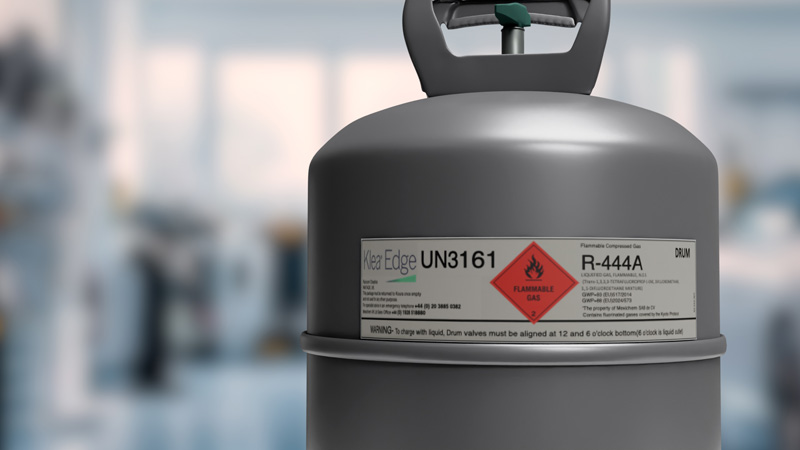
For vehicles that have already adopted R-1234yf, Klea Edge 444A is another cost-effective, low-PFAS, drop-in refrigerant that delivers higher cooling performance and improves fuel economy for EVs. With potential new PFAS regulations taking effect from 2026, switching to a low-PFAS refrigerant will help future-proof garages, avoiding disruptions and unpredictable compliance costs.
Best practice
The transition to more environmentally friendly refrigerants involves more than simply swapping one gas for another. For technicians working in the aftermarket, staying informed and up to date with best practices is required to ensure safe, compliant, and efficient servicing.
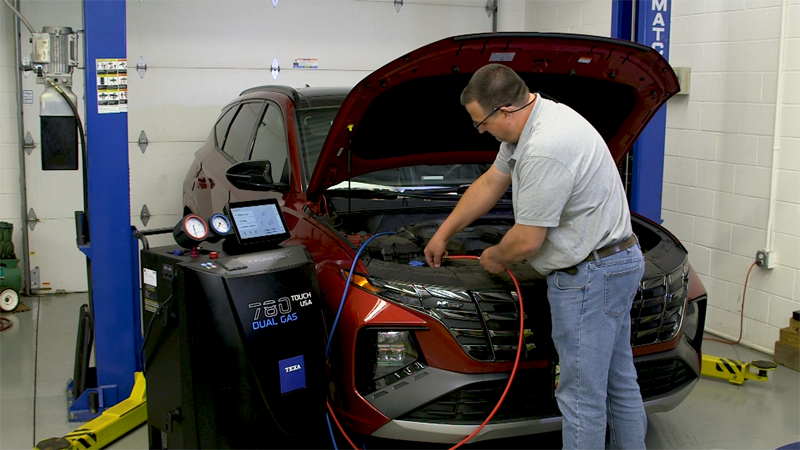
Both Klea 456A and Klea Edge 444A share the same flammability classifications as the refrigerants they are designed to replace, reducing complexity in day-to-day workshop operations. However, proper system labelling is equally important during retrofits. Clearly marking a system with the correct refrigerant information ensures accurate service records, avoids confusion during future maintenance, and helps garages remain compliant with regulations.
As with any refrigerant, established recovery and recycling procedures must be followed closely to maintain safety and environmental standards. Oil compatibility with existing R-134a and R-1234yf lubricants further simplifies servicing, though technicians should continue to check manufacturer guidance to confirm the latest recommendations. Staying up to date with these details will be key to a smooth transition as new refrigerants become more widely adopted.
The remaining challenge is ensuring that technicians receive the right training and technical support. To support this transition, Orbia is partnering with organisations such as Nissens to deliver training sessions focused on A/C installation and retrofitting. These sessions provide comprehensive guidance and live demonstrations covering the full process of converting a vehicle to one of our next-generation refrigerants.
With the right training and the adoption of these advanced refrigerants, workshops can ensure compliance, safety, supply, and dependable pricing whilst protecting the environment and continuing to deliver dependable service as the automotive industry enters a new era of cooling.


![Bosch’s ESI[tronic] diagnostic software](https://pmmonline.co.uk/wp-content/uploads/2026/03/Febi-diagnostics-tool-165x109.jpg)