
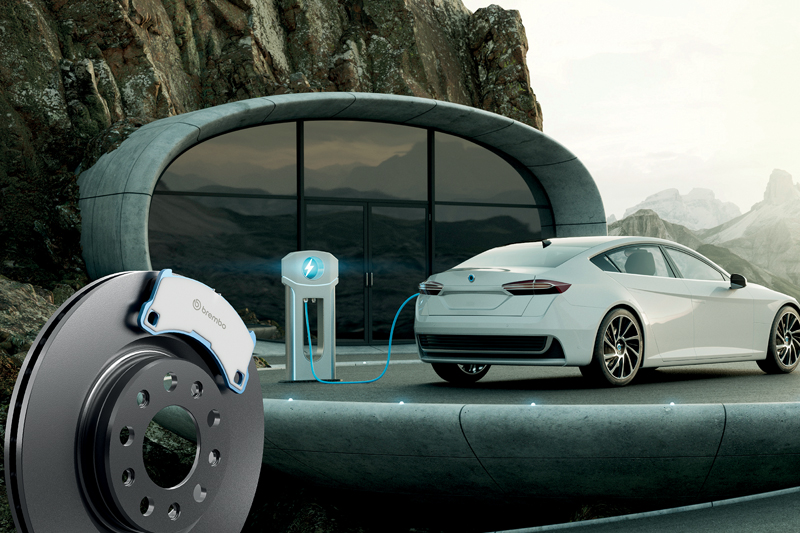
Braking specialist Brembo explains how tomorrow’s electric vehicle braking solutions are better for drivers and the environment.
Notably, EVs are far heavier than their ICE counterparts. This places extra demands on the engine components, especially the braking system which must work far harder to slow or stop the vehicle. Take the VW Golf VII for example. The petrol model is the lightest but has high CO2 emissions. The more eco-friendly hybrid and all-electric models however are nearly 300kg heavier, mainly due to the considerable weight of their batteries. This makes them harder to decelerate, as well as increasing the thermal stress on the braking system.
Regenerative and friction: better together
The main unique feature of nearly all electric car braking systems is regenerative braking, which EVs use extensively alongside conventional friction (hydraulic) braking mechanisms. Regenerative braking, made possible by the advent of vehicle electrification, harnesses the electric motor to recuperate a significant portion of the kinetic energy dissipated during braking – a substantial leap forward in terms of sustainability. Through regenerative deceleration, electric vehicles effectively convert the electric motor into a generator during braking manoeuvres. While the potential for energy recuperation in EVs is subject to certain limitations, regenerative braking plays a pivotal role in deceleration, reducing reliance on traditional friction brakes.
However, the integration of regenerative braking presents accompanying challenges. While advantageous, regenerative braking alone is insufficient to halt a vehicle and prevent collisions, underlining the continued necessity of conventional friction braking systems. Consequently, vehicles equipped with regenerative braking systems are also equipped with friction brakes for scenarios where the former may be insufficient or inactive.
Challenges and solutions
So what are the implications for electric vehicle braking innovations?
The prevalence of regenerative braking systems in EVs has led to a shift in how braking is actioned, with a significant proportion now executed by the electric motor itself. Consequently, hydraulic braking systems are implemented less often. While this reduction minimises wear on the hydraulic brake components, it also makes them susceptible to corrosive deterioration, posing risks to the durability and efficiency of the braking system that workshops should be aware of.
In response to these challenges, Brembo has introduced the Brembo Beyond product line – a comprehensive range of aftermarket braking solutions designed to enhance the driving dynamics of the growing electric mobility segment, while prioritising sustainability.
Comprising specially coated discs and innovative brake pads tailored for popular electric car models, the Brembo Beyond EV Kit epitomises the company’s dedication to harnessing cutting-edge materials and technologies that deliver both superior performance and longevity. Notably, the incorporation of a special, copper-free brake pad friction material with a galvanised backing plate reduces both dust and noise during braking – contributing to an extended lifespan and enhanced sustainability. In addition, a special surface treatment on the discs in the Beyond range prevents oxidation problems up to 60,000 miles and beyond.
As the automotive landscape undergoes the paradigm shift towards electrification, workshops are already anticipating and adapting to the unique challenges posed by EVs. With distinct design and maintenance requirements, electric vehicle braking systems require particular, specialised knowledge and expertise.
Key considerations for technicians include:
Pad and disc replacements: Due to the regenerative braking system, the intervals between pad and disc replacements in EVs are typically extended. However, technicians should remain vigilant for signs of oxidation, particularly in vehicles operating in harsh weather conditions where brakes are used less frequently.
Brake fluid replacement: While traditional brake fluid replacement intervals are generally recommended for EVs, low viscosity fluids are preferred to ensure optimal performance, especially in vehicles equipped with advanced braking and traction control systems.
EV brake pads: Given the reduced ambient noise of electric vehicles, minimising any brake noise, vibration, and harshness (NVH) is paramount. Special attention should be paid to brake pads and discs to prevent excessive corrosion. This will ensure consistent, reliable braking performance even after prolonged periods of inactivity.

![Bosch’s ESI[tronic] diagnostic software](https://pmmonline.co.uk/wp-content/uploads/2026/03/Febi-diagnostics-tool-165x109.jpg)