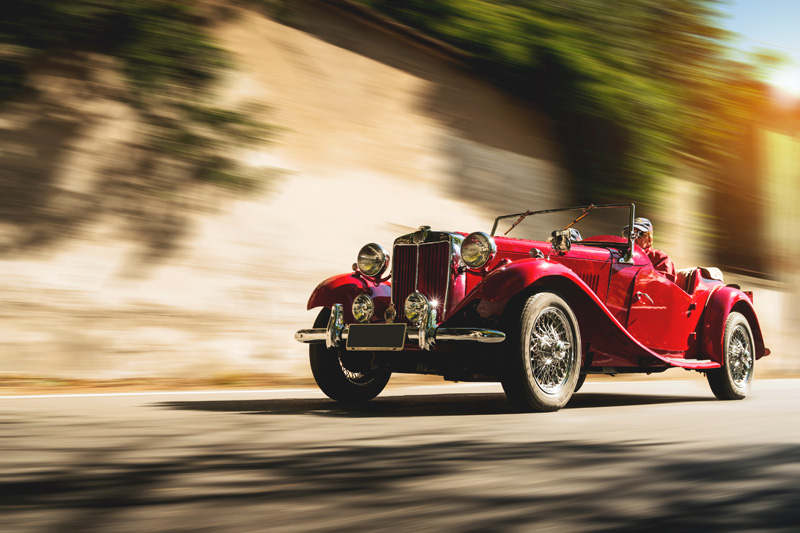
For any classic car garage, the engine oil on the shelf is as much a piece of preservation equipment as a spanner or torque wrench.
According to the latest annual report from the Federation of British Historic Vehicle Clubs, the UK’s historic vehicle movement continues to thrive, supporting a substantial slice of the economy and representing a vast fleet of vehicles now well beyond their original design life. In practical terms, that means more classics on the road, more restorations in workshops, and a growing responsibility on technicians to understand lubrication not just as maintenance, but as long-term conservation.
In this article, Nigel Bottom, group managing director of British lubricant manufacturer Witham Group, takes a look at how motor oil has evolved, why modern oils don’t always suit older engines and what mechanics can do to keep vintage motors running sweetly for decades to come.
Mineral to modern: How did we get here?
When many of the classics we service were built, engine oils were simple mineral blends. Early monograde oils (SAE 30, SAE 40) had limited additive packages and relied largely on frequent changes to control wear and contamination. Engines were designed with looser tolerances, flat-tappet camshafts and relatively low operating temperatures, so these straightforward oils were entirely appropriate.
As engine technology advanced through the 1960s-1990s, oils evolved too: Detergent additives were introduced to keep engines cleaner; Multigrade oils (e.g. 10W-40) improved cold-start protection; Anti-wear additives, particularly ZDDP (zinc dialkyldithiophosphate for those wondering), protected cam lobes and followers. Later, synthetic base oils delivered higher stability and longer drain intervals.
Today’s engines, with tight tolerances, turbochargers and emissions equipment, demand low-viscosity, low-SAPS oils. But here’s the catch: those modern formulations don’t always suit older engines.
Historic vehicles in modern workshops
The latest FBHVC report emphasises that the historic vehicle parc is ageing and used differently from modern cars: Lower annual mileages; more time in storage; and more vehicles undergoing restoration or sympathetic rebuilds. For mechanics, this translates into a different lubrication mindset:
- Engines are often under-used, not over-used
Long lay-ups increase condensation, fuel dilution and corrosion risk – issues oil must actively combat
- Original engine designs are still in service
Flat-tappet cams, cork seals and rope rear mains all place unique demands on lubricant chemistry.
- Longevity is the priority
Owners are rarely chasing maximum performance; they want reliable starts, minimal wear, and preservation of original components.
When traditional is better
It’s tempting to assume that the latest synthetic oil will automatically improve an older engine. In reality, several factors make classic-compatible lubricants essential:
- Zinc content matters
Many classic engines rely on higher ZDDP levels to protect flat-tappet camshafts. Modern low-zinc oils—designed to protect catalytic converters—can accelerate wear in older valvetrain designs.
- Seal compatibility
Modern synthetic oils can be more aggressive on aged seals and gaskets, sometimes leading to leaks in engines that were perfectly dry on older mineral formulations.
- Detergent levels
Highly detergent modern oils can dislodge decades of harmless sludge in an unrestored engine, potentially blocking oilways or filters. Controlled-cleanliness formulations are often safer for original units.
Keeping vintage motors running “as long as possible” is less about pushing performance and more about controlled ageing. Today’s workshop has to consider:
- Low mileage, high time
Classic cars might only cover 1,000 miles a year, but the oil is ageing continuously. Moisture and acids build up even when mileage is low, making annual oil changes essential regardless of distance covered.
- Storage and seasonal use
Extended lay-ups call for oils with good corrosion inhibitors. Pre-storage oil changes help remove acidic contaminants, while a fresh change before recommissioning provides optimum protection.
- Rebuilt vs. original engines
Fresh rebuilds need running-in oils with appropriate additive levels.
Unrestored originals often benefit from gentler detergency and slightly higher viscosity to maintain oil pressure and reduce blow-by.
Best practice
To give customers confidence and engines longevity, consider these key lubrication strategies:
Match viscosity to design, not fashion: Many classics were designed around 20W-50 oils, and that thicker film can be vital for worn clearances.
Prioritise anti-wear protection: Engines with flat-tappet cams need adequate zinc/phosphorus levels.
Change oil on time, not just mileage: Ageing oil causes corrosion even when the vehicle is rarely driven.
Watch for fuel dilution: Carburetted engines and short runs can thin oil quickly.
Use specialist formulations where appropriate: Oils tailored for classic and historic vehicles often strike the right balance between protection and compatibility.
Ensure your oil supplier has the technical expertise to give the right recommendations, no matter how old or modified it is. Modifications can make a real difference to what lubricants are required.
Working on vintage motors isn’t just mechanical repair: it’s stewardship. These vehicles are preserved not merely as transport, but as cultural and engineering artefacts. For the technician, that means every oil change, rebuild and recommissioning job contributes to the survival of machines that were never designed to last this long.
Understanding lubrication history gives us an edge:
It explains why some engines prefer “old-school” oil chemistry.
It helps diagnose wear patterns linked to modern low-zinc oils.
It informs restoration decisions—especially when originality matters as much as reliability.
Being a classic and vintage car technician, never mind the owner, comes with the responsibility to choose lubricants that respect both the engineering of the past and the realities of modern use.
In short, the right oil isn’t just about lubrication, it’s about ensuring that the engines we service today will still be running, sounding and performing as intended for the next generation of enthusiasts to enjoy. Quality is key, with care and pride as given.
If you would like to discuss any lubricant queries or discuss a new lubricant partnership with a company that knows a thing or two about car engine oil since 1921, please get in touch with Witham Group.