Febi takes on a tour through the evolution of suspension and the role it now plays in the modern vehicle.
Air suspension originated in the early 20th century as an alternative to conventional spring-based systems. The technology first entered the mass market in America in the 1950s when it began being fitted to trucks and buses due to its ability to enhance ride comfort, improve handling characteristics and manage varying loads.
As the technology improved during the 1980s and 1990s, manufacturers including Mercedes-Benz, Audi, BMW and Land Rover began integrating air suspension systems into their premium models, either as standard fitment or as a factory-fitted option.
With continued advancements in both hardware and software technology, air suspension systems have evolved to incorporate electronic controls that deliver enhanced capabilities such as adaptive ride height and load levelling, further refining ride quality and vehicle performance.
How air suspension works
Air suspension systems use compressed air-filled bags, or air springs, instead of traditional steel or coil springs to support the vehicle’s weight and absorb forces generated by the vehicle in motion.
The main components and their functions are as follows:
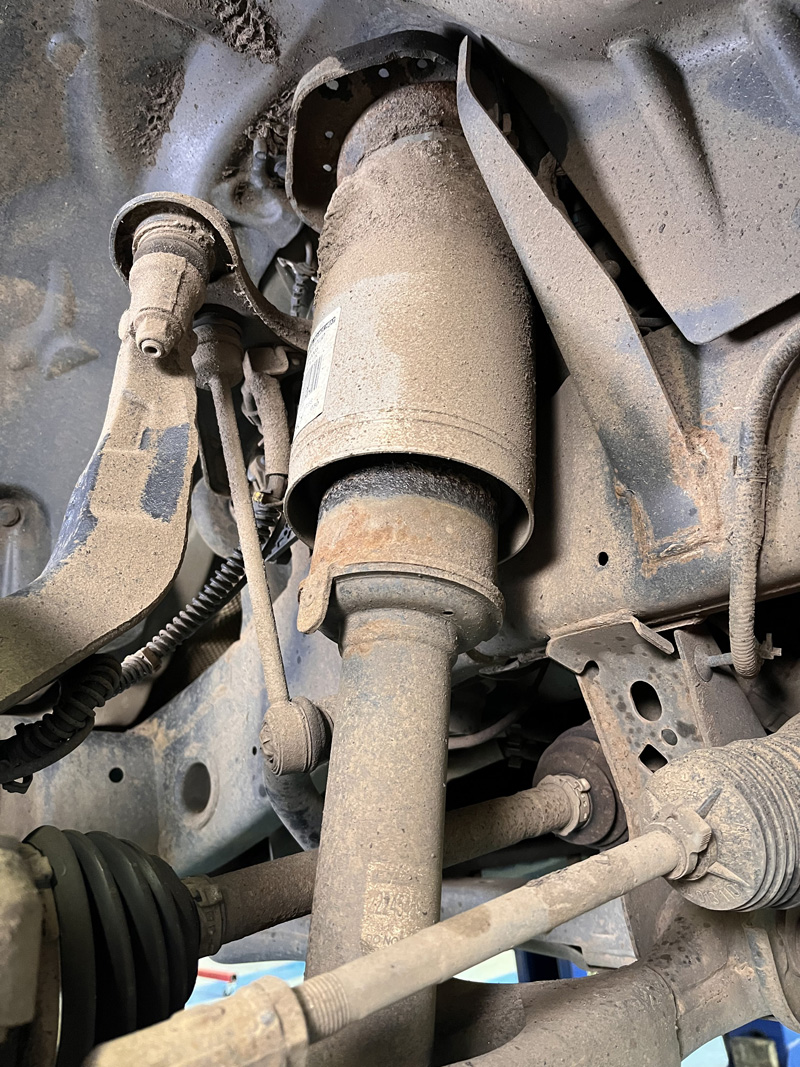
Air springs (air bags): These are flexible rubber bags filled with compressed air. They provide the main support and damping effect in the system, absorbing forces from the road and adjusting height as needed (Fig.1).
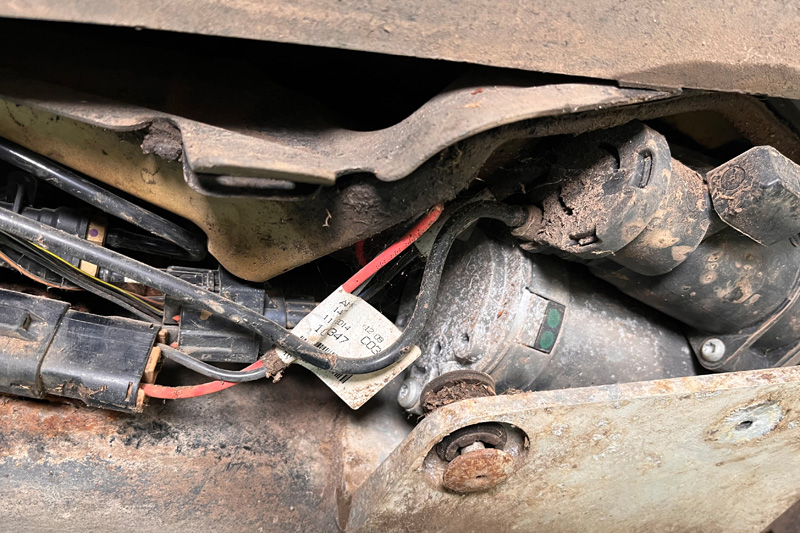
Air compressor: The compressor pumps air into the air springs to adjust the ride height and maintain system pressure. The electric motor driven compressors operate on-demand or when triggered by the system’s control module (Fig.2).
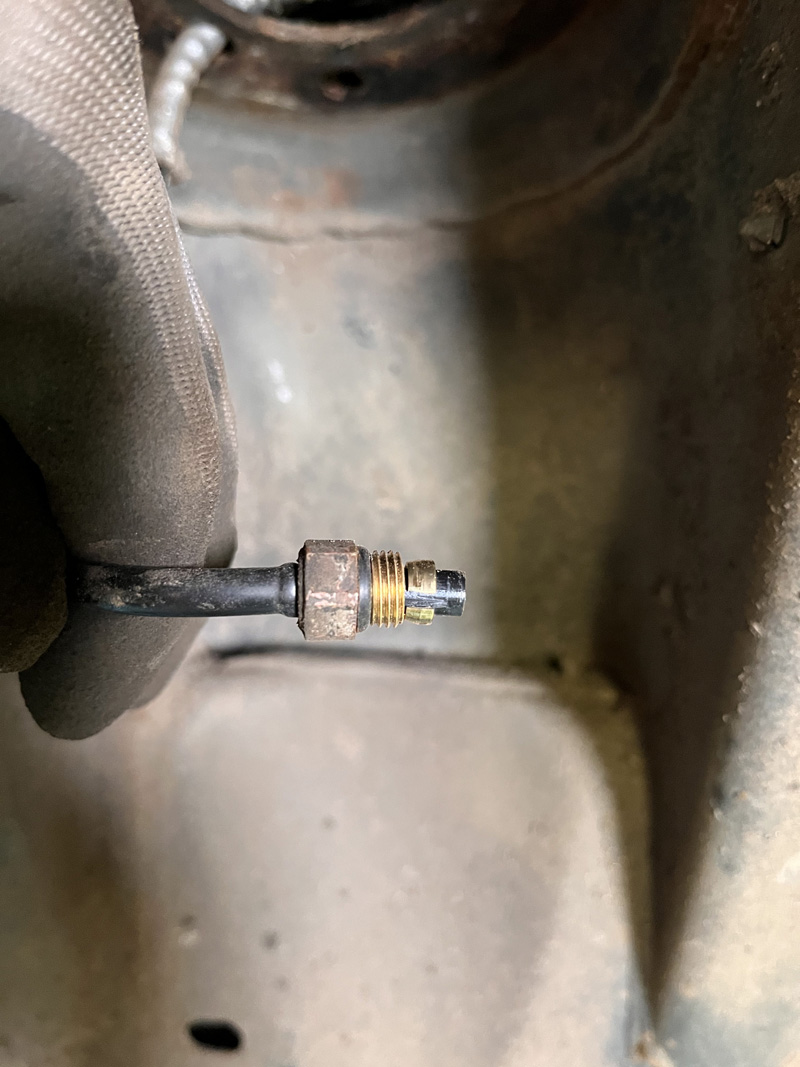
Air lines: These tubes connect the compressor to the air springs and allow pressurised air to travel to each corner of the vehicle and the corresponding air spring (Main Image/Featured Image).
Electronic control module: The ECM monitors data from various sensors and regulates the pressure in the air springs to maintain optimal height and load levelling.
Height sensors: These sensors measure the vehicle’s ride height and provide feedback to the ECM to make any adjustments necessary.
Solenoids and valves: These components control the flow of air in and out of each air spring, ensuring that each corner of the vehicle maintains the desired ride height and load balance.
System operation
The air suspension system is dynamically adjustable. When additional weight is applied to the vehicle, such as when passengers enter or a load is added, the control unit detects the change and instructs the compressor to supply air to the relevant air spring, raising the vehicle to its preset height.
This system ensures that the vehicle remains level and stable, even when towing heavy loads. As a result, air suspension has become a preferred option for large 4×4 vehicles known for their high towing capacities such as the Land Rover Discovery, Volkswagen Touareg and Toyota Land Cruiser.
In high-speed driving conditions, the control unit may lower the vehicle to improve aerodynamics and stability. Adaptive air suspension systems found in luxury and performance vehicles also allow drivers to switch between different ride heights or stiffness settings for varying road conditions.
Common air suspension failures
Despite the luxury and comfort air suspension provides, it comes with some vulnerabilities. Here are some of the most common issues and their causes:
Air spring leaks: Over time, the rubber of the air springs can degrade, leading to cracks or holes. This is especially common in older vehicles or those exposed to harsh conditions. Leaks are typically found at the folds of the airbag where the material flexes the most. When this is the case, the vehicle will not remain at the preset height when left for a long period of time, either dropping equally around the vehicle or at one or more corners.
Compressor failures: A failing compressor is often due to overuse. When there is an air leak the compressor must work harder to maintain the correct air pressure, leading to premature wear and failure.
Faulty control module: The control unit can develop issues due to software malfunctions, water damage or wiring problems. This may lead to erratic ride height adjustments or total failure of the air suspension
Failed height sensors: If the height sensors become corroded, disconnected, or fail entirely, the system can no longer correctly adjust ride height, leading to incorrect levelling or unexpected drops in ride height.
Electrical issues: Loose connections, corroded terminals, or broken wiring can disrupt the power flow to components like the compressor or solenoids, leading to intermittent or complete suspension failure.
Diagnostic and repair tips
Given the complexity of the system diagnosing air suspension issues can be challenging. Here are some practical tips to help you troubleshoot and repair air suspension problems efficiently.
As with all electric-based systems, air suspension control units are equipped with diagnostic capabilities that can provide fault codes when components fail. Using a suitable diagnostic tool is a start to finding a failed component such as a sensor or solenoid.
Also check for live data values or perform a system test, subject to the capability of the vehicle and the diagnostic tool being used. Visually inspect the air springs for signs of wear, such as cracks or splits, especially near the folds. Spray soapy water on the springs and watch for bubbles which indicate a leak on the faulty component.
When the vehicle is idling, listen for a hissing sound near each wheel. Small leaks may not be easily visible but can be heard. Often, an air spring may develop tiny leaks that will require patience and close listening to locate.
If the system is not maintaining height, check whether the compressor is running. If it’s not, inspect the fuse and relay first. If the compressor is running but the vehicle isn’t rising, check for leaks in the air lines or defective solenoids. Overheating or frequent cycling is a sign that the compressor is likely being overworked due to a leak somewhere else in the system.
Clean and dry quality electrical connections are critical. Ensure connectors are tight, corrosion-free, and the wiring harness is intact. In some cases, suspension issues are due to simple electrical faults, so it’s essential to rule these out before replacing major components.
Height sensors are prone to failure or misalignment, especially in vehicles that are used off-road. If the sensors are damaged, corroded, or misaligned, replace or recalibrate them. Recalibration typically involves levelling the vehicle manually or using a diagnostic tool to reset the control unit’s sensor parameters.
When replacing any component of the air suspension system, such as an air spring or compressor, it is essential to adhere strictly to the manufacturer’s instructions. It is important to understand the procedure for raising the vehicle, activating the ‘Service mode’ (also known as ‘Jack mode’), and de-energising the air pressure within the system to ensure safe handling. Following the replacement of any components, many air suspension systems require recalibration or initialisation, a process that typically requires a diagnostic tool to be used.
To ensure the longevity of air suspension components, it is important to regularly clean the vehicle’s chassis and suspension parts to avoid corrosion. Additionally, these components should be routinely inspected as part of the regular maintenance process.
While air suspension systems offer luxury and adaptability, their complexity demands a skilled approach to maintenance and repair. Understanding the common failures, diagnostics, and repair techniques associated with air suspension systems can save time, reduce unnecessary parts replacement, and improve customer satisfaction.
Febi’s new air suspension range
Febi’s new air suspension range is designed to provide comfort and performance for European vehicles with a comprehensive communications package.
The new range offers an extensive selection of air spring struts, air springs and air compressors with more than 75 articles covering over 4,000 vehicle applications. febi air suspension offers OE-matching components for popular models from manufacturers including Mercedes-Benz, Audi, BMW and Land Rover; with the range set to expand based on customer demand.
“febi has always been known for delivering reliable OE-matching replacement parts,” said Dominic Lammert, divisional director global brand management. “With this new air suspension range, we’re providing solutions that preserve the premium driving experience while offering long-lasting durability and performance.”
Key benefits:
- Over 75 products covering 4,000+ vehicle applications, with continued expansion based on customer demand.
- OE-matching quality and functionality, designed and manufactured to meet the high standards of the bilstein group.
- Backed by a 3-Year manufacturer guarantee, offering long-term reliability and peace of mind.