After testing every battery, support every battery, says Veloris’ Andy Waite, as he follows up with Silver Street Motors, a garage which has been doing just that.
Despite the proven revenue generating opportunities, not to mention the reputational benefits that come with it, there are many independent workshops that are still not proactively testing the condition of the batteries in the vehicles that are coming to them for service or repair. What’s more, those workshops that provide support for the battery with a supply charge during diagnostic processes, or prolonged servicing procedures, are few and far between.
With this in mind, we as Veloris, formerly Ecobat Battery, the UK’s largest battery distributor, continue to raise the issue as we don’t want the workshop community to continue losing out when the evidence that both battery testing and battery support are financially and operationally beneficial, is undeniable.
To further endorse the ‘test every battery’ principle, I recently returned to Silver Street Motors in Tiverton, where owner Steve Webber had trialled it last spring. The initial findings showed that testing each battery with an EBT780 battery tester had helped to build stronger relationships with Steve’s customers, as well as increase the business’s battery sales.
The purpose of this second visit wasn’t just to find out whether Steve was still benefitting from the battery testing policy, but to follow up on a second trial, which centred on the battery support principle.
Although Steve doesn’t currently do much diagnostic work, largely because the previous owner of the business that he recently acquired didn’t offer the service, the principle of battery support extends beyond diagnostics to an increasing number of standard service and repair procedures.
Using a commonplace example, it is now not unusual for the manufacturer’s service instructions to require the vehicle’s ignition to be on, when undertaking standard servicing procedures. These include everyday jobs, like changing the rear brake pads.
Expect unexpected delays
Workshops don’t need me to tell them that very often jobs like this can have complications that mean it takes longer to complete than the time officially specified by the vehicle manufacturer’s data, which means that there is a greater drain on the battery. Left unsupported, should the job take longer than expected, or the battery already be partially discharged, the result can have a huge impact on the battery and potentially leave the technician unable to complete the job, or in extreme cases, unable to start the vehicle.
Returning to the subject of diagnostic processes. With the increasing complexity of vehicle electronics and electrical systems, the length of time that these procedures, and the associated software updates, can take is extending and can now take several hours, sometimes they are even carried out overnight. Maintaining the correct voltage into the system during these often-prolonged periods, is therefore vital to enable technicians to perform them successfully.
This demands a stable source of power, at the correct voltage, to be constantly supplied to the vehicle’s electrical system and that requires the right equipment, which is where we are steering the conversation, and alongside our primary automotive sector charging partner, CTEK, providing workshops with the hardware and the additional information they need, specifically highlighting the dangers of de-rating.
De-rating is the process by which electronic equipment reduces its output capacity to prevent overheating or protect internal components from damage due to excessive load or temperature conditions. In the workshop this phenomenon can have a significant impact. When chargers or battery support units de-rate, they may fail to provide the stable voltage required for critical vehicle operations. This can lead to disrupted diagnostics, aborted ECU programming, or malfunctioning electronic systems.
Given the sensitive nature of modern automotive electronics, avoiding de-rating during servicing is crucial. This underscores the need for high quality, reliable battery support units that can maintain their output even under demanding conditions.
Investing in reliable battery support systems ensures that technicians can carry out diagnostics, software updates, and complex repairs without the risk of voltage drops. A stable and consistent power supply prevents unnecessary disruptions and protects sensitive vehicle electronics.
So, when selecting a battery support unit, workshops should only consider units that maintain a stable voltage, even under heavy loads, and prevent heat buildup that could lower output and disrupt operations. In addition, the unit must be designed to handle diagnostics and ECU programming, and provide a precise voltage control, to protect sensitive vehicle electronics.
The sheer number of electronic components now utilised in vehicles has made stable voltage a critical factor during many service and repair processes. From the infotainment system to ADAS (advanced driver assistance systems), virtually every area relies on it because voltage fluctuations during servicing can corrupt data, damage sensitive components, and lead to unwanted extra costs.
In the real world
Bringing the focus back to Steve and his experiences at Silver Street Motors, is the battery testing model still paying dividends, and does battery support add to his business’s efficiency?
“Well, the answer to the first question is an unequivocal yes,” says Steve, “as the ability to provide our customers with an accurate measure of the condition of their vehicle’s battery continues to be a service they like. It may not sound that important, but they really appreciate the fact that the tool clearly demonstrates whether the battery is good, bad or in decline.
“This gives them the facts to allow them to make an informed decision to either replace it or not, and as our month battery sales figures can tell you, most take the safest option and buy a new battery, rather than risk the car not starting when they need it.
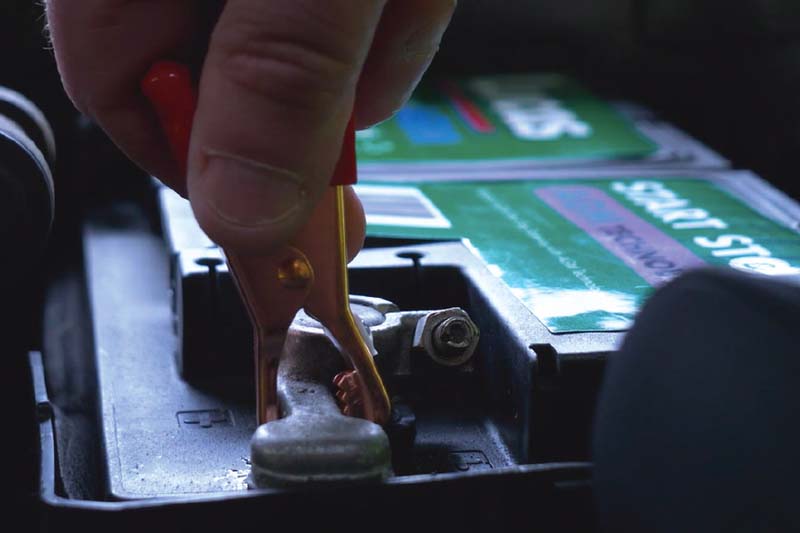
“When it comes to battery support, the truth is I don’t currently do much diagnostics work, but I know this will come as I develop the business, and when it does, I’ll certainly follow the practice to ensure the processes are completed successfully. In the meantime, by retiring the old and unreliable 15amp charger I inherited, and using the CTEK charger I was loaned, we’ve been able to further help our customers by, after running the battery test, giving their battery a high-quality charge while the vehicle has been in the workshop.
“This has meant that we can confidently carry out those ignition on jobs that Andy was referring to, but also hand the vehicle back to the owner with the battery in its peak condition, which further endorses our growing reputation for customer service. So, for us, the test every battery, support every battery message, is nothing but good news.”