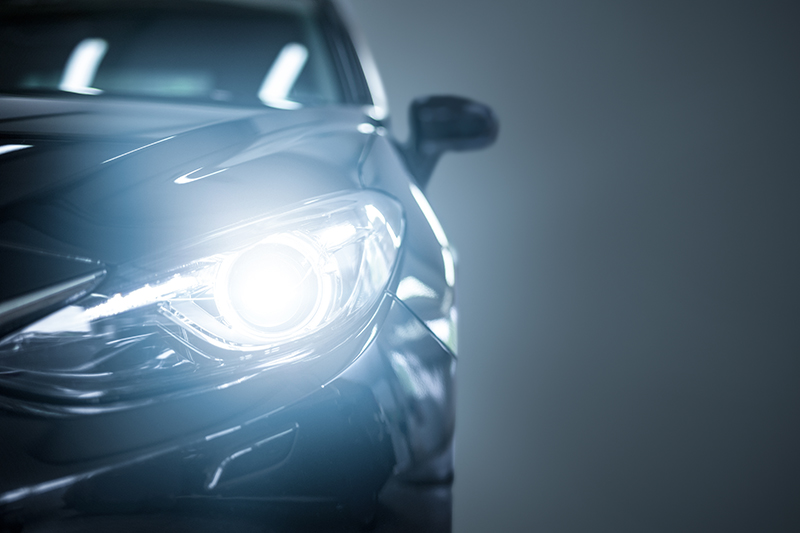
Research from RAC has revealed more than half of drivers who are dazzled by headlights (57%) say the problem has worsened over the last 12 months with only three-in-10 (31%) disagreeing.
In findings which lay bare the continued impact of headlight glare, 63% of all drivers say they are subjected to dazzle from vehicles behind which they can’t avoid, with 14% saying it happens regularly. A third of those affected by dazzle (33%) feel less safe when driving at night while a quarter (25%) say it knocks their confidence behind the wheel.
A quarter of respondents (25%) who find headlights too bright are either driving less at night or have given up altogether. Interestingly it’s those at either end of the age spectrum which are most affected, with the figure leaping to 33% of under 35s and as many as 43% of those aged 75 and above. And across drivers of all age groups, 16% wished they could drive less at night but have no choice not to.
Of those who are now driving less at night as a result of headlight glare, four-in-five (78%) say it was because they found driving more difficult or uncomfortable. Almost half (45%) of motorists now drive less at night because it makes them feel unsafe behind the wheel.
Driving less or even stopping doing so at night is also having a tangible effect on people’s lives with 36% of this group now having less contact with friends while a quarter (24%) aren’t seeing family members as much. Almost six-in-10 (58%) say their social life has been impacted while 15% find it harder to attend important events like healthcare appointments as they struggle to drive in the dark.
Meanwhile, half of all drivers who get dazzled (51%) struggle to spot hazards or see road markings or signs as a result, while four-in-10 (42%) can’t confidently judge the speed or distance of oncoming vehicles. A quarter (25%) say they’ve been temporarily blinded.
Four-in-10 of those affected (39%) say they have to look away from the road when they’re dazzled, while a quarter (24%) cover their wing mirrors with their hands while driving to block out the glare from vehicles behind. Around one-in-10 (8%) have talked to their optometrist about the problem.
The RAC asked drivers about how their current vehicle’s headlights differ from their last. Of those that said their latest vehicle had brighter headlights, half (49%) said they felt safer as a result but interestingly this means the remainder felt no safer or even less safe when driving a vehicle with brighter headlights.
And of the third of respondents (32%) who drive cars with adaptive driving beam systems, which automatically switch headlights to high beam, then back to dipped beam when an oncoming vehicle is detected, a quarter (24%) said they don’t think they dip fast enough, increasing the risk of dazzling other roads users.
It’s not just headlights drivers are complaining about, with four-in-10 (38%) saying they get dazzled by the brake lights of vehicles in front of them. This is becoming a more common occurrence with the increase in vehicles fitted with ‘auto hold’ brakes, keeping a car stationary in traffic, keeping the rear brake lights on in contrast to engaging the handbrake or parking brake, which turns them off. Just 25% of respondents say they always engage the handbrake or parking brake while stopped in traffic, which explains the increased instances of glare.
Drivers unanimously want to see something done, with 87% supportive of the Government’s plan to conduct more research into the issue and the same proportion wanting to see how existing headlight regulations could be amended to improve the situation. Three-quarters (77%) would like a public information campaign to help drivers understand the issue better, something the RAC and its partners have already taken steps to support with a series of informational videos.
RAC Senior Policy Officer, Rod Dennis, said: “Dazzle from headlights is now a perennial problem for drivers and it’s clearer than ever that they want to see something done. For some it’s just a mild annoyance but for others it’s tangibly affecting their lives as drivers – from feeling less safe or confident behind the wheel to avoiding nighttime journeys altogether, even if that means missing appointments or opportunities to spend time with friends and family.
“Drivers consistently tell us the height of vehicles, and the apparent colour of headlights are contributors to glare, so these are two areas we believe the Government should consider in its next stage of research.
“Headlight glare is a complicated area and there’s sadly no simple ‘fix’ that will eradicate it. But for the first time ever there is now a concerted effort – both in the UK and internationally – to tackle it. We’re grateful to every driver who has contacted us, often with great passion, about this issue and we’re proud to be at the forefront of the search for possible remedies.
“We look forward to continuing work with the Government and our campaign partners with the aim of reducing the problem of glare in the years ahead. In the meantime, we urge drivers to do what they can to minimise the likelihood of dazzling others, and to reduce the effects of glare on themselves. Our website and social media channels have advice that can help.”