Diagnostics expert Edd Hunt, the Car Consultant, details his recent effort to get to the bottom of a bothersome blower.
Having been ranked number one in the UK on Denso’s League of True Mechanics for three years running and going on to then win ‘Auto-Mechanik of the Year’ at last year’s Automechanika, I figured it wouldn’t be long before I got fame, fortune and fans… So far there’s been no sign of fame or fortune but I have managed to get fans… Well, a job fixing an issue with over-active cooling fans that is!
Ok, not quite what I imagined but I do love a good challenge and this job certainly proved to be an interesting one so I figured it was worthy of a write up for PMM. The car itself is a 2019 Volkswagen Sharan TDI and the customer was complaining of the cooling fans running continuously for a long time after the engine was turned off every time, even on cold days.
Before even looking at the car, my initial thoughts jumped to DPF regeneration. As we all know, fans running continuously after switching off the engine on a cold day could be attributed to DPF regeneration, as that causes excessive heat which needs to be cooled down. But in theory this could explain it happening now and again, not every journey.
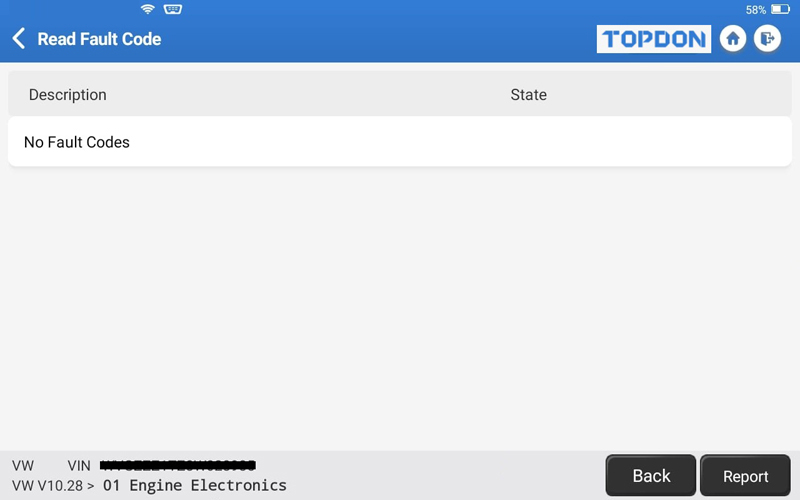
The car arrives after a modest journey and sure enough, even after the engine is switched off, the fans run at high speed for a considerable amount of time. The first thing I do is plug in the diagnostics and check for fault codes: No codes registered (Fig.1).
I’ve been caught out with this one in the past so I access the live data menu and check when the last delete of the fault memory occurred in case the owner or another mechanic has just cleared the fault codes, having attempted to fix it first before bringing it to me. The last fault code delete was over 2,000 miles ago so we now know there are genuinely no fault codes. Looks like I’m on my own here with no fault codes as guidance! While I’m in the live data menu I check the recent history of DPF regeneration and find the last recorded regen to be over 300 miles ago and no recent failed regens so this disproves the DPF theory. I then check the readings for coolant temperature and both coolant temps are reading below 70 at this point yet the fans are still running.
A wiring issue?
On to the next theory of a possible wiring issue. I download the wiring diagram for the vehicle and meticulously check and trace all of the wiring for the fans for any possible short circuits and guess what… none found! Next, I allow the vehicle to cool completely overnight with a view to starting it the next day and monitoring what happens right from a cold start.
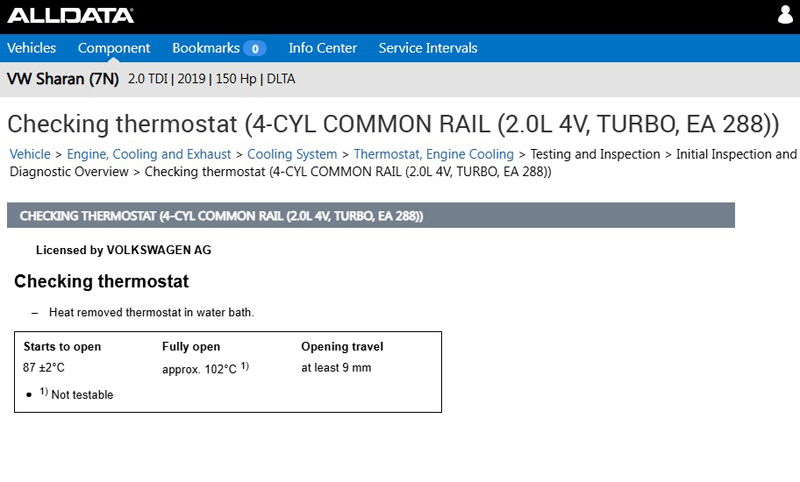
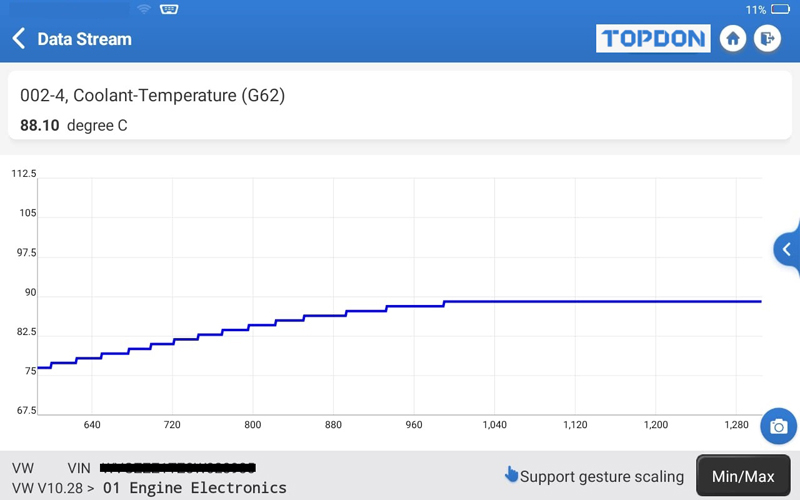
Next morning comes, I start the engine and monitor the cooling system as the engine warms up. All is operating as it should. The thermostat should open between 85 and 89 degrees (reference ALLDATA [Fig.2]) and it opens when you’d expect at 88 degrees so almost smack bang in the middle of the range where it should (Fig.3).
Water pump flows, cooling fans cut in and there are no blockages around the system so the cooling system is functioning exactly as it should and regulating the temperature of the engine.

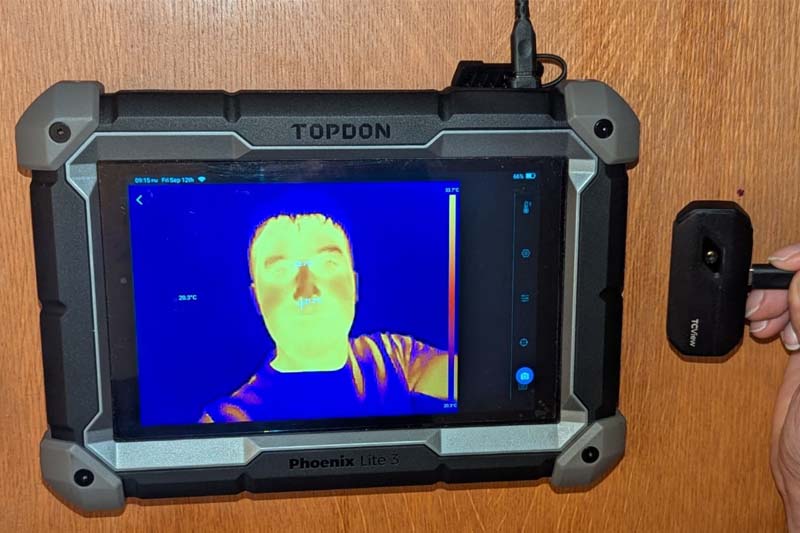
Before I start getting hot under the collar and needing to turn on the workshop fan myself I pull out the thermal imaging camera. I use a Topdon TC001 camera (Fig.4) as it works perfectly with my Phoenix Lite 3 diagnostic machine, I like seeing the thermal imaging on a bigger screen and it also works with my mobile too but other models and brands are available to do a similar job.
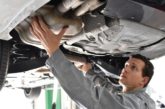
I start around the top of the engine looking for anything getting too hot, all looks good, moving round to the front I poke the camera through the grille and check the radiator etc, all good. But as soon as I get underneath the car, the problem becomes instantly apparent when looking through the thermal imaging camera. As you can see from the screenshot I’ve taken (Main Image) there is a huge heat spot inside the catalytic converter. Presumably a faulty CAT has melted internally and formed a lump inside that is creating a localised area where an excessive build-up of heat is occurring and taking a lot longer to cool down after the engine is switched off, or a hot spot if you will which is being detected and causing the cooling fans to run after switch off to cool down the exhaust exactly as they would if the heat had been generated by a DPF regeneration.
Replacement of the faulty catalytic converter remedied the issue and stopped the overrunning of the fans after switch-off. What a ‘fan’-tastic result! A job well done. The trick to dealing with problems like this which require a little outside-the-box thinking is to ‘stay cool’ and not ‘blow’ it out of proportion (couldn’t resist the puns, insert groans/eye roll here). Joking aside though, when dealing with an issue like this a thermal imaging camera can really save time and help get you to a definitive diagnosis quicker!
I’m still waiting on the fame and fortune but when you think about it, who needs lots of adoring fans, I hear some of them can be ‘viscous’!