Comline Group filter product manager, Toni Spiridon reveals how workshops can ensure their customers’ vehicles are winter-ready.
Winter is upon us: temperatures have dropped, roads are damp and debris is prominent on the surface too. Consequently, workshops receive vehicles with different problems than those likely welcomed in summer – fewer ai conditioning failures and overheating engines and more battery replacement and bulb checks.
The RAC advises that fluids are topped up, batteries are checked, preparations are made for night-time driving, and tyres are in optimum condition – but Comline believes that filter maintenance is also pivotal ahead of the next few months.
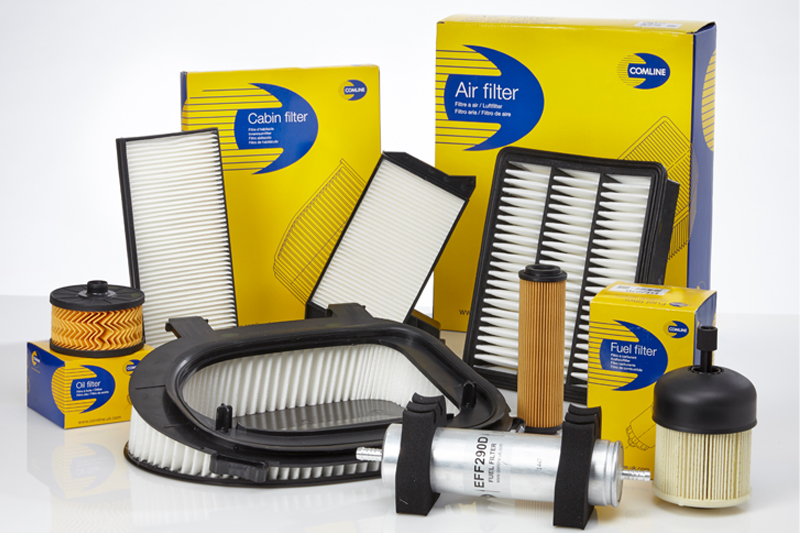
Cabin air filter: Fallen leaves and misty conditions can quickly clog cabin filters with debris, restricting airflow and reducing HVAC efficiency. A blocked filter can also allow pollutants and allergens into the cabin, creating unpleasant odours and poor air quality.
Replacing the cabin filter can overcome these barriers, allowing for consistent airflow and preventing strain on blowers and heater systems. As allergens peak, a straightforward filter change can make a significant difference to both comfort and customer satisfaction.
Air filter: Engines rely on a clean, unrestricted supply of air for optimal combustion. Over time, an air filter will collect dust, dirt and debris that can choke performance and reduce efficiency.
A clean air filter provides accurate airfuel ratios, helping the engine to run smoothly, maintain good fuel economy and reduce wear on sensitive components, like the MAF sensor and throttle body. For workshops, this is a quick and effective way to strengthen performance, cut emissions and enhance cold-start reliability.
Oil filter: Oil filters may be small – but they have a big responsibility! They capture harmful contaminants that accumulate in the engine oil. Left unchecked and unchanged, a clogged filter can wreak havoc – starting with the restriction of oil flow, reduction in lubrication and increase in internal wear.
Comline recommends replacing the oil filter at least once a year or at every service interval, in line with VM schedules. Most European engines incorporate fine tolerances and advanced lubrication systems, so clean and compatible oil is essential for reliability, efficiency, performance and durability. Routine replacement helps maintain oil pressure too, protecting against sludge build-up.
Fuel filter: Did you know that as the temperature drops, the risk of diesel vehicles falling foul to fuel gelling goes up? This is when paraffin wax in the fuel solidifies into crystals. If the fuel filter is already dirty or partially blocked, those crystals can halt fuel flow – leading to poor starting, loss of power and maybe even expensive pump damage.
Replacing the diesel fuel filter then is good practice; a new one will provide clean fuel delivery to the engine and consistent pressure, as well as remove built-up water and contaminants that will only increase chances of problems, like corrosion and injector damage. Most OEMs recommend a replacement every 10,000-20,000 miles or annually.
The range
The brand now sells millions of own-brand filters worldwide. Manufactured in marketleading production facilities, Comline’s filters incorporate premium filter media from renowned producers. Each filter is rigorously analysed, performance-tested and benchmarked to guarantee consistent quality.